
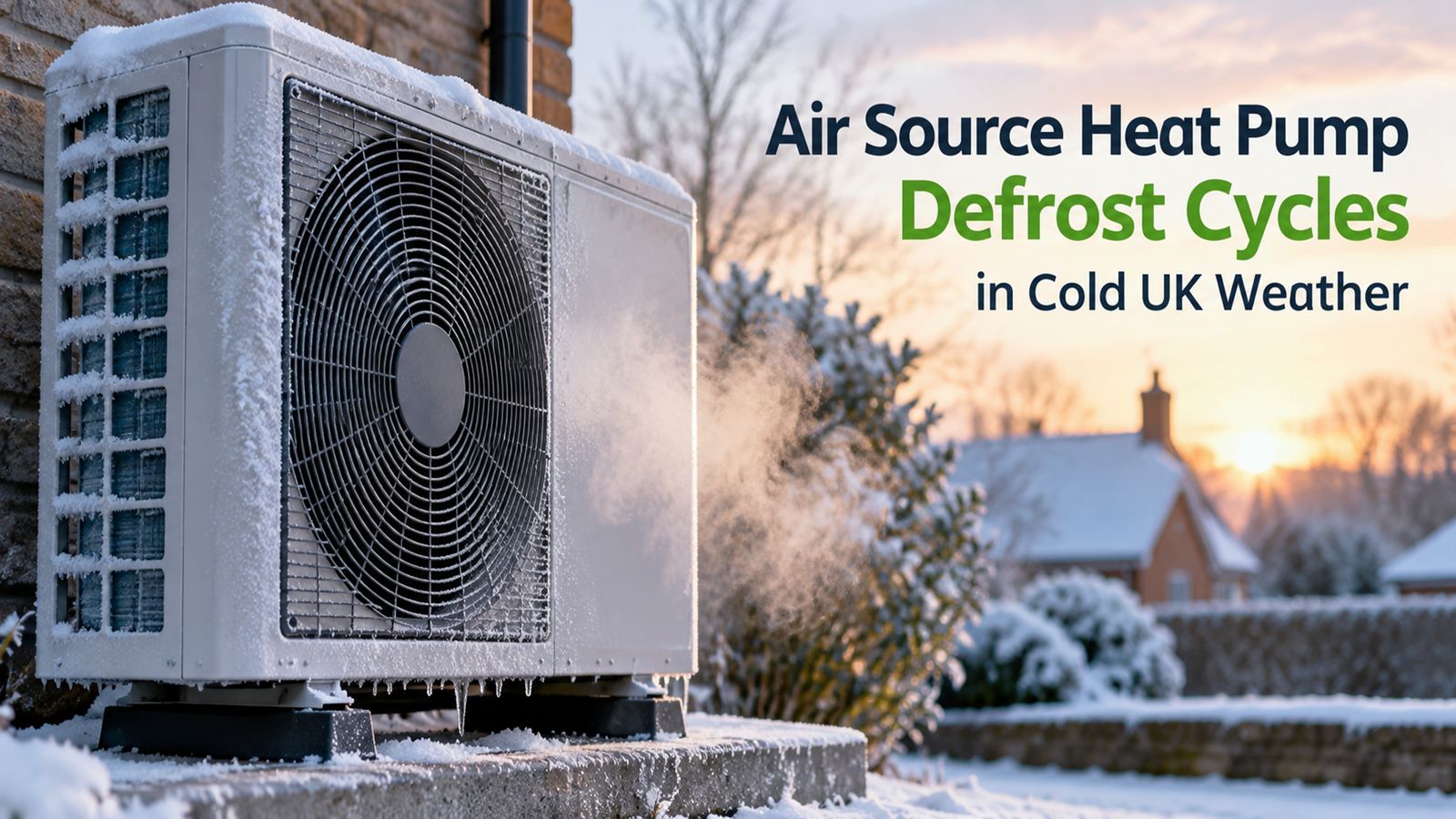
When temperatures drop, you may notice frost on your air source heat pump's outdoor unit, a change in its sound, or a brief cloud of steam-like vapour. These can be normal signs of a defrost cycle rather than a fault.
Understanding how defrosting works can help you recognise normal winter operation, keep the area around the unit clear, and know when to contact an installer or heating engineer.
Why Does an Air Source Heat Pump Need to Defrost?
An air source heat pump extracts heat from outdoor air, even in cold weather. During operation, the outdoor coil can become colder than the surrounding air. If moisture in the air freezes on the coil, frost begins to build up.
A layer of frost can restrict airflow and reduce heat transfer. The heat pump therefore runs a defrost cycle to remove accumulated ice. Frost alone does not mean the system is failing; what matters is whether the ice clears and normal heating resumes.
What Happens During a Defrost Cycle?
The precise process varies by model, but a typical automatic cycle follows these steps:
- Frost is detected or inferred. Sensors and control logic determine when defrosting is needed.
- Operation temporarily changes. Many systems reverse the refrigeration cycle to send heat to the outdoor coil.
- The frost melts. Water drains away from the unit.
- Heating resumes. The system returns to normal operation when the cycle finishes.
You may hear the fan or compressor change sound, and the outdoor fan may stop temporarily. A visible cloud of water vapour and water beneath the unit can also be normal. Check the manufacturer's instructions for guidance specific to your model.
Why Defrost Cycles Matter in UK Winters
Outdoor temperature is only one factor in frost formation. Humidity, airflow, and the heat pump's operating conditions also affect how often defrosting is needed.
Damp, chilly weather can be particularly favourable to frost forming on the coil. Conditions near freezing may lead to frequent frosting when moisture levels are high, while the pattern can differ in drier or much colder weather.
A short defrost cycle in suitable conditions is part of normal operation. Repeated, prolonged, or unsuccessful cycles deserve closer attention, especially if the home is not staying warm.
Does Defrosting Increase Energy Use?
Defrosting uses energy and temporarily diverts heat from normal space heating. Some systems may also use supplementary heat, depending on their design and settings. This is part of how the equipment manages frost.
If cycles become unusually frequent or the outdoor coil remains heavily iced, efficiency may be affected. Possible causes include restricted airflow, installation issues, sensor or control problems, or a component fault. Frost alone is not enough to identify the cause.
Avoid changing installer settings just to reduce defrosting. The controls are designed to balance frost removal, safe operation, and efficiency.
How to Help Your Heat Pump in Cold Weather
A few sensible checks can help your system operate as intended:
- Keep airflow clear. Remove loose debris from around the unit and follow the manufacturer's clearance guidance.
- Do not obstruct grilles. Avoid placing items against the casing or covering the unit.
- Allow water to drain. Defrost water needs a suitable route away from the unit. Persistent ice around the base may need professional attention.
- Check for visible damage. Look for blocked grilles or damaged casing without removing panels.
- Follow the maintenance schedule. Regular servicing can help identify problems before winter.
- Follow your installer's advice. Use the recommended heating settings rather than making frequent changes in response to one defrost cycle.
Never chip ice off the coil, pour boiling water over it, or apply salt or chemical de-icers. These actions can damage components or create hazards. If the unit is encased in persistent ice, contact a qualified professional.
When Is Frost a Sign of a Problem?
Some frost and temporary vapour can be expected in winter. Arrange a professional check if you notice:
- Thick ice that does not clear after a defrost cycle.
- Defrost cycles that seem unusually frequent or prolonged for your system.
- A sustained drop in indoor comfort or heating performance.
- Repeated error codes, warning lights, or unexpected shutdowns.
- Unusual mechanical noises, visible damage, or ice obstructing the unit.
These signs can have several causes. Record any error code and when the issue occurs, as this can help an engineer assess the problem. Do not open the unit or attempt electrical or mechanical repairs yourself.
Frequently Asked Questions
Is it normal for an air source heat pump to steam in winter?
It can be. During defrosting, melted frost may create visible water vapour in cold air. If the unit returns to normal operation, this may be part of its usual cycle. Persistent ice or poor heating should be checked.
How often should a heat pump defrost?
There is no single interval for every model. Frequency depends on the equipment, weather, moisture levels, and system operation. Follow the manufacturer's guidance rather than relying on a fixed number.
Should I switch off my heat pump when I see frost?
Do not switch it off solely because of a light coating of frost; the system is designed to manage this automatically. If heavy ice remains, an error appears, or heating performance falls, consult the manufacturer's guidance or a professional.
Can I remove ice from the outdoor unit myself?
Do not scrape or chip ice off the coil, as this can damage delicate components. Keep the surrounding area clear and seek professional help if the ice does not clear.
Keep Your Heat Pump Ready for Winter
Defrost cycles are a normal part of many air source heat pumps' operation in cold, damp UK weather. Temporary changes in sound, visible vapour, and meltwater can occur as the system removes frost from its outdoor coil.
Look for a return to normal operation, keep airflow clear, and follow the manufacturer's maintenance advice. Seek professional support if heavy ice persists, warnings appear, or heating performance changes noticeably.
If you are considering an air source heat pump or need advice on your home's heating options, contact Infinity to discuss your requirements and the suitability of different solutions for your property.
Ready to improve your home's energy efficiency?
Check your eligibility for grants and book a free survey with our team.
Book Free Survey