
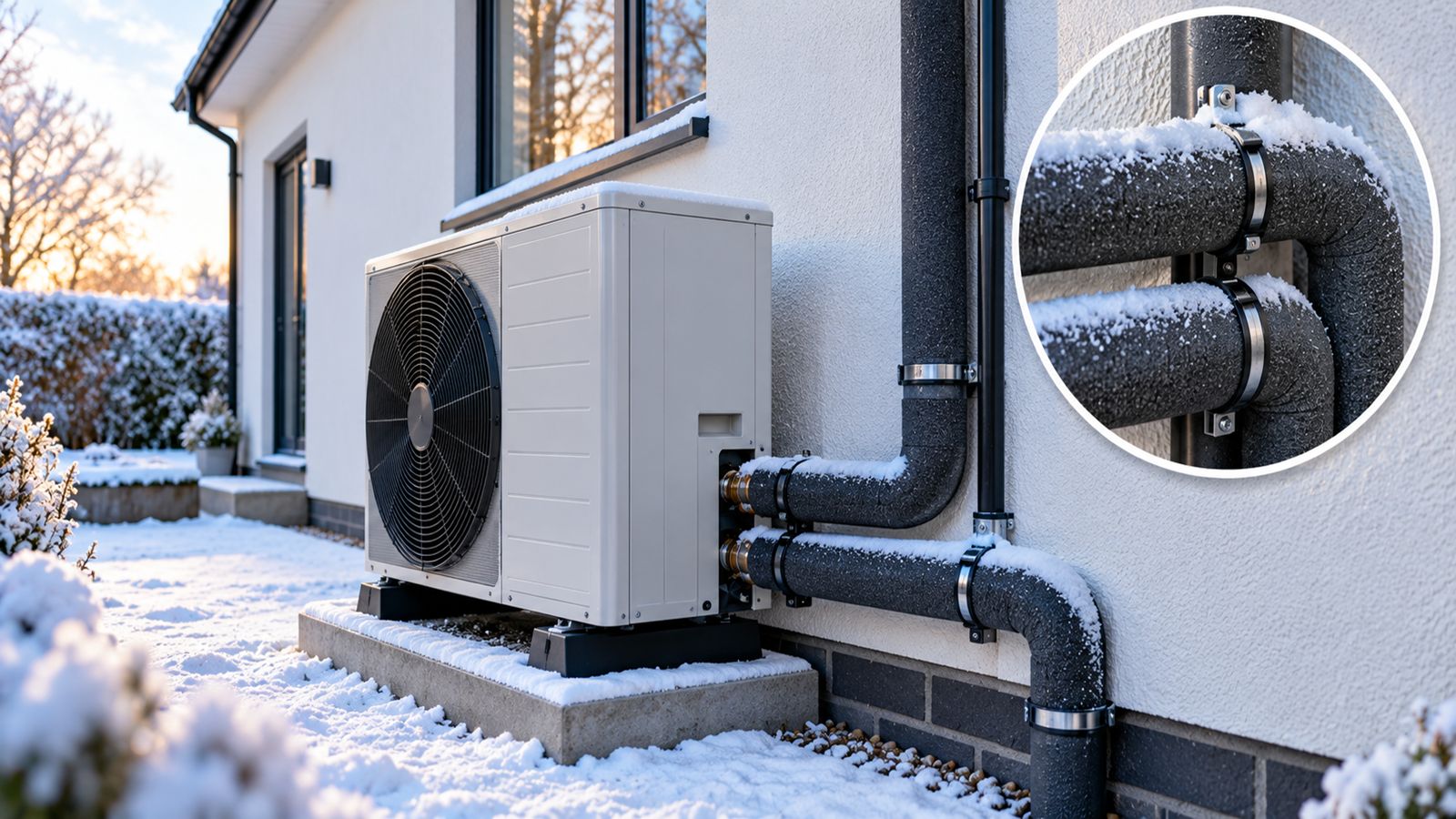
When temperatures drop during winter, keeping your home's heating system working efficiently becomes especially important. If you have an air source heat pump, insulating the connecting pipework is a simple but important part of preparing your system for colder weather.
Poorly insulated pipes can lose heat before it reaches your home, reducing overall efficiency and potentially increasing energy consumption. Exposed pipework may also be vulnerable to freezing conditions, particularly during prolonged cold spells.
In this guide, we explain why air source heat pump pipe insulation matters in winter, which pipes need protection, and how to keep your system properly maintained throughout the colder months.
Why Is Pipe Insulation Important for Air Source Heat Pumps?
An air source heat pump transfers heat from the outdoor air into your home. Depending on the system design, insulated pipework carries heated water between the heat pump and your property's heating circuit or hot water system.
When these pipes pass through outdoor areas, garages, or unheated spaces, heat can escape into the surrounding environment. Insulation helps reduce these losses, allowing more of the available heat to reach where it is needed.
Proper insulation can provide several benefits:
- Reduced heat loss: Helps retain heat as water travels through the pipework.
- Improved efficiency: Reduces unnecessary heat loss, particularly along longer pipe runs.
- Freeze protection: Provides some protection against rapid cooling during cold weather.
- More consistent heating: Helps the system deliver heat more effectively to your home.
- Protection for pipework: Suitable insulation and weatherproofing can help protect exposed sections from environmental damage.
Insulation does not eliminate every risk associated with freezing temperatures, but it is an important part of a properly designed installation.
Which Pipes Need Insulating?
Not every pipe has the same insulation requirements. The appropriate materials and thickness depend on the pipe's function, operating temperature, location, and exposure to weather.
Outdoor Flow and Return Pipes
On many air source heat pump systems, flow and return pipes carry water between the outdoor unit and the indoor heating circuit. Where these pipes are exposed to cold air, suitable insulation helps limit heat loss.
Outdoor insulation must be designed for external conditions. Ordinary indoor pipe lagging may deteriorate when exposed to rain, sunlight, and changing temperatures, so a suitable weather-resistant protective covering is important.
Pipes in Garages and Unheated Areas
Pipework running through garages, lofts, utility rooms, and other unheated spaces can lose heat even when it is not directly exposed to outdoor weather.
Insulating these sections helps reduce unnecessary heat loss and can offer additional protection during cold spells.
Condensate and Drainage Pipes
Some heat pump installations include drainage arrangements for water produced during normal operation or defrost cycles. These pipes need to be installed according to the manufacturer's guidance, with suitable drainage and protection against freezing where required.
Do not assume that all drainage pipes should be insulated in the same way as heating-water pipes. Their purpose, routing, and temperature conditions are different.
Choosing the Right Pipe Insulation
Selecting suitable insulation involves more than choosing the thickest available material. The product must be appropriate for the pipework and its installation environment.
Thermal Performance
Insulation materials have different thermal properties. The correct thickness and performance should be selected according to the pipe diameter, operating temperature, location, and applicable building requirements.
Your installer can recommend suitable insulation for the particular heat pump system.
Weather Resistance
Outdoor pipe insulation needs protection from rain, moisture, ultraviolet light, and physical damage. A durable external covering helps maintain the insulation's performance over time.
If moisture enters the insulation, its effectiveness can be reduced, and the pipework may become more vulnerable to damage.
Secure Fitting
Insulation should fit closely around the pipework, with joints and connections properly sealed. Gaps around bends, valves, and fittings can allow heat to escape.
Care is particularly important where pipes pass through walls or connect to the heat pump and indoor heating circuit.
How to Prepare Air Source Heat Pump Pipework for Winter
A little preparation before the coldest weather arrives can help identify problems before they affect your heating system.
1. Inspect Visible Insulation
Look for cracked coverings, loose joints, exposed pipe sections, or signs of water damage. Pay particular attention to outdoor pipework and sections running through unheated areas.
If insulation is damaged or deteriorating, arrange for suitable repairs.
2. Check for Gaps and Exposed Sections
Small gaps around joints and bends can leave parts of the pipework unprotected. A qualified installer can check that insulation is continuous and appropriate for the conditions.
3. Keep Drainage Routes Clear
Check that accessible drainage outlets are free from leaves and other obstructions. Blocked drainage can cause water to collect and freeze in cold weather.
Follow the manufacturer's maintenance guidance, and do not dismantle electrical or refrigerant components yourself.
4. Arrange Professional Maintenance
A professional service can assess the condition of the insulation, inspect accessible pipework, and check the system's general operation.
Routine maintenance is especially useful if your heat pump has experienced problems during previous winters.
Can Poor Pipe Insulation Increase Running Costs?
Yes, inadequate insulation can increase heat loss from hot-water pipework. When heat escapes before reaching the heating circuit, the system may need to supply additional energy to meet the property's heating demand.
The effect on running costs depends on factors such as pipe length, water temperature, outdoor conditions, insulation quality, and the system's overall efficiency.
However, pipe insulation is only one part of the picture. The heat pump's sizing, controls, flow temperature, building insulation, and heating schedule also influence energy consumption.
For the best results, consider pipe insulation alongside the overall performance of your heating system rather than treating it as a standalone solution.
What Should You Do If Pipes Freeze?
If you suspect that a heat pump pipe has frozen, avoid applying boiling water, open flames, or direct high heat to the affected area. These methods can damage pipes, insulation, or other system components.
Instead:
- Check the manufacturer's instructions for cold-weather operation.
- Look for visible signs of ice or restricted drainage without dismantling the system.
- Contact a qualified heating engineer if you suspect frozen heating pipework or the system stops operating correctly.
- Do not force the system to run if there are signs of damage or a fault.
Some heat pumps have built-in frost-protection functions, but these should not be treated as a substitute for proper installation and insulation. Their operation may also depend on the availability of electrical power and the system's settings.
Other Ways to Help Your Heat Pump Perform Well in Winter
Pipe insulation works best as part of a wider approach to winter maintenance.
- Keep the outdoor unit's air inlet and outlet clear of leaves, snow, and other obstructions.
- Follow the manufacturer's guidance for cleaning and maintaining the unit.
- Use appropriate heating schedules and controls rather than making frequent, unnecessary temperature changes.
- Check your home's insulation and draught-proofing where improvements are needed.
- Arrange servicing at the recommended intervals.
Avoid removing ice from the outdoor unit with sharp tools or interfering with its normal defrost cycle. If heavy ice remains or the unit appears to be malfunctioning, seek professional advice.
Conclusion
Preparing your air source heat pump for winter starts with paying attention to the details. Suitable pipe insulation helps reduce heat loss, protects exposed pipework from harsh weather, and supports the efficient operation of your heating system.
Check visible insulation before temperatures fall, address damaged or exposed sections, and make sure outdoor pipework is protected with materials designed for the conditions. For concerns about freezing, drainage, or system performance, professional advice is the safest approach.
Need advice on your air source heat pump? Contact Infinity to discuss your heating requirements and explore ways to keep your system properly maintained and ready for colder weather.
Ready to improve your home's energy efficiency?
Check your eligibility for grants and book a free survey with our team.
Book Free Survey