
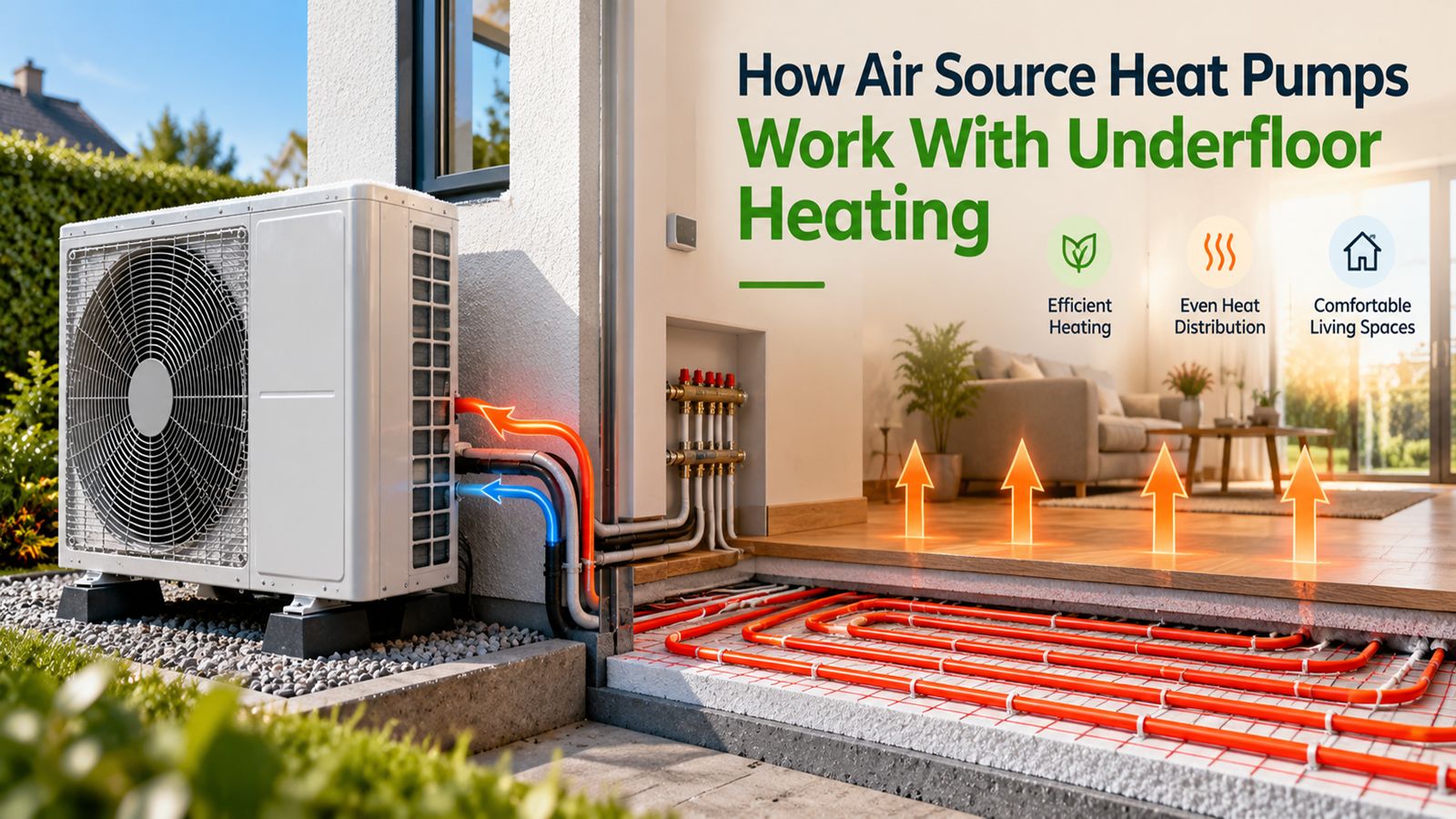
Air source heat pumps and underfloor heating can work together to provide comfortable, energy-efficient heating for homes across the UK. By combining a renewable heating system with a large floor-based heat distribution surface, homeowners can create a heating setup designed to maintain comfortable indoor temperatures without relying on high water temperatures.
However, the performance of this combination depends on several factors, including property insulation, floor construction, system design, and heating controls. Understanding how these components work together can help you decide whether this solution is suitable for your home.
How Does an Air Source Heat Pump Work?
An air source heat pump extracts heat energy from the outdoor air and transfers it into a home's heating system. Even when outdoor temperatures are low, the system can collect available heat and use electricity to raise its temperature to a level suitable for domestic heating.
The heated water circulates through the property's heating distribution system, such as underfloor heating pipework. Unlike a conventional boiler, which generates heat through fuel combustion, an air source heat pump transfers heat from one place to another.
Its efficiency depends on operating conditions, including outdoor temperature, the required water temperature, and the quality of the installation.
How Does Underfloor Heating Work With a Heat Pump?
Underfloor heating distributes warmth through pipes installed beneath the floor surface. These pipes carry warm water, allowing heat to spread across the floor and gradually warm the room.
Air source heat pumps generally work well with underfloor heating because the system can deliver the required warmth using relatively low water temperatures. The large surface area of the floor helps transfer heat into the room without requiring the concentrated output associated with smaller heat emitters.
A typical installation includes the following components:
- Air source heat pump: Extracts heat from outdoor air and heats the circulating water.
- Underfloor heating pipework: Distributes warm water beneath the floor.
- Manifold: Directs water to individual heating circuits and helps regulate their flow.
- Heating controls: Manage temperatures, schedules, and individual zones where fitted.
- Insulation: Helps reduce unwanted heat loss through the floor and supports effective heat distribution.
All components need to be selected and configured as part of a properly designed heating system.
Why Low Water Temperatures Matter
One of the main advantages of combining an air source heat pump with underfloor heating is the potential to operate at lower water temperatures than some conventional radiator systems require.
Heat pumps generally operate more efficiently when the difference between the heat source temperature and the required heating water temperature is smaller. Underfloor heating can support this because warmth is spread over a relatively large surface area.
Lower operating temperatures do not automatically guarantee lower energy bills. Actual performance depends on the property's heat demand, electricity tariff, system controls, installation quality, and how the household uses its heating.
Benefits of Combining Heat Pumps and Underfloor Heating
Comfortable Heat Distribution
Underfloor heating distributes warmth across the floor rather than concentrating it around individual radiators. This can help create a comfortable indoor environment when the system is correctly designed for the room.
Potential for Improved Heating Efficiency
A suitably designed underfloor heating system may allow an air source heat pump to operate at lower flow temperatures. This can support better efficiency compared with operating the same heat pump at unnecessarily high temperatures.
More Flexible Room Layouts
Because underfloor heating does not require wall-mounted radiators, it can provide greater flexibility when arranging furniture and planning interior spaces.
Suitable for New Builds and Renovations
Underfloor heating can be incorporated into new-build properties and some renovation projects. The most suitable installation method depends on the existing floor structure, available floor height, insulation, and the scale of the work required.
Is Underfloor Heating Suitable for Every Property?
Not every property is automatically suitable for this combination. Before installation, a heating professional should assess the building's heat loss, insulation levels, floor construction, and room-by-room heating requirements.
Older properties may require insulation improvements or other building upgrades to reduce heat demand. Existing floors can also create practical challenges, particularly where raising the floor level would affect doors, stairs, thresholds, or adjoining rooms.
In some homes, a hybrid approach or a different heat distribution arrangement may be more appropriate. The correct solution should be based on the property's requirements rather than a standard package.
What Should You Check Before Installation?
1. Property Insulation
Check the condition of the roof, walls, floors, windows, and doors. Reducing unnecessary heat loss can help the heating system meet the property's requirements more effectively.
2. Floor Construction
Determine whether the property has a suitable floor structure for the chosen underfloor heating system. Wet systems using pipes within a screed and lower-profile renovation systems have different installation requirements and response times.
3. Room-by-Room Heat Loss
A heat loss assessment helps establish how much heat each room requires. This information informs the design of the heat pump, underfloor heating circuits, and operating temperatures.
4. Heating Controls
Correctly configured controls help manage heating schedules and temperatures. Because underfloor heating can respond more slowly than some radiator systems, especially when embedded in a thick screed, the control strategy should suit the floor construction and household routine.
5. Installation and Commissioning
The system should be installed, tested, and commissioned by suitably qualified professionals. Checks may include water flow rates, manifold settings, control operation, and the heat pump's operating parameters.
Can You Replace Radiators With Underfloor Heating?
Replacing radiators with underfloor heating may be possible, but it is not always straightforward. The work can involve removing existing radiators, modifying pipework, altering floor levels, and installing suitable insulation.
A professional assessment should determine whether underfloor heating can meet the heating demand in every room. Where full replacement is impractical, retaining selected radiators or using a combination of heat emitters may be worth considering, provided the system is designed to operate correctly.
Air Source Heat Pump and Underfloor Heating Installation
Planning an air source heat pump alongside underfloor heating requires a joined-up approach. The heat pump capacity, floor heating design, insulation, water temperatures, and controls should work together to meet the property's heating needs.
Infinity can help homeowners explore heating upgrade options and understand the factors involved in planning an air source heat pump installation. The right approach will depend on your property, existing heating system, and renovation plans.
Considering an air source heat pump for your home? Contact Infinity to discuss your heating requirements and explore a suitable solution for your property.
Ready to improve your home's energy efficiency?
Check your eligibility for grants and book a free survey with our team.
Book Free Survey