
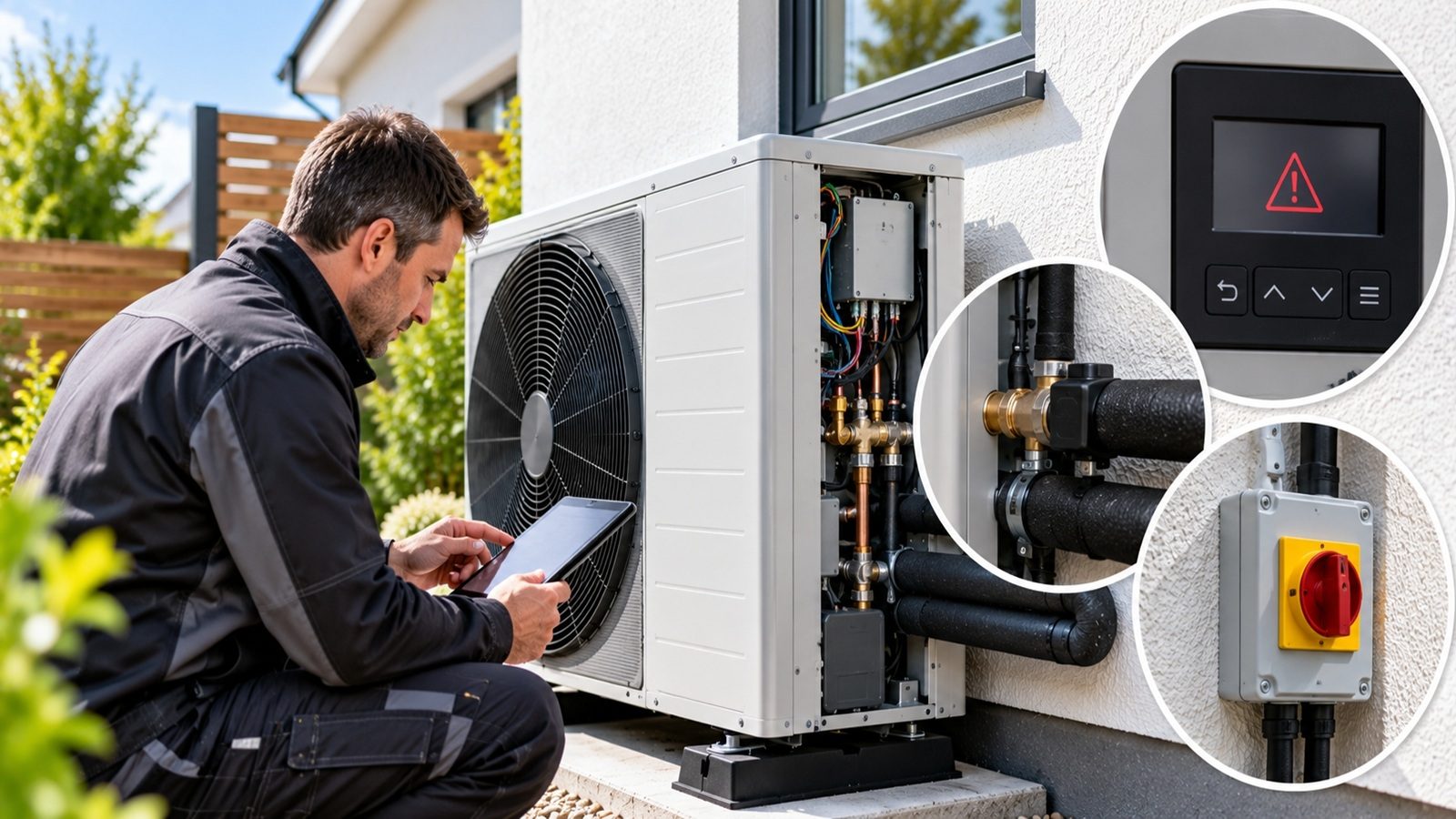
An air source heat pump is designed to provide reliable heating and hot water, but like any heating system, it can occasionally develop a fault. If a warning light appears or an error code shows on the controller, it is natural to wonder whether the system has stopped working or needs professional attention.
The good news is that not every error code indicates a serious problem. Some warnings relate to temporary operating conditions, restricted airflow, or settings that need checking. Others point to faults that require a qualified engineer.
Understanding air source heat pump error codes can help you identify what to check first, recognise when to stop troubleshooting, and explain the problem clearly when arranging professional support.
What Do Air Source Heat Pump Error Codes Mean?
Error codes are messages generated by a heat pump's control system when it detects an unusual condition or a component that is not operating as expected.
The meaning of a code depends on the manufacturer and model. A particular code on one system may indicate a sensor issue, while the same code on another could mean something entirely different. Always consult the manual for your exact model rather than relying on a general online code list.
Common categories of faults include:
- Water pressure or water flow problems.
- Restricted airflow around the outdoor unit.
- Temperature sensor or communication faults.
- Electrical supply interruptions.
- Refrigerant circuit or compressor problems.
- Defrosting issues during cold weather.
The code is a starting point for diagnosis, not necessarily a complete explanation of the underlying fault.
Air Source Heat Pump Error Codes: What to Check First
Before arranging a repair, there are several basic checks you may be able to carry out safely.
1. Record the Error Code
Write down the complete code exactly as displayed. If possible, take a photograph of the controller screen and note when the warning appeared.
Check whether the code is accompanied by other messages, unusual noises, or a loss of heating or hot water. This information can help an engineer narrow down the possible causes.
Avoid repeatedly resetting the system before recording the fault, as this may remove useful information from the display.
2. Check the Controller and Operating Settings
Sometimes a heating system appears faulty because its settings have changed or its operating schedule is not what you expect.
Check the controller for:
- The selected heating mode.
- The programmed heating schedule.
- The hot water schedule, if applicable.
- Any displayed room temperature or target temperature.
- Whether the system is showing a fault or simply waiting for a scheduled operating period.
Follow the manufacturer's instructions, and do not alter installer-level settings unless you understand their purpose.
3. Inspect the Outdoor Unit
Air source heat pumps need adequate airflow to transfer heat effectively. Leaves, loose debris, or other obstructions around the outdoor unit can interfere with operation.
From a safe distance, check whether the air intake and outlet are visibly obstructed. Remove loose debris only if it is safe to do so and the manufacturer permits it.
Do not open the casing, reach inside the unit, or attempt to remove ice from the fan or heat exchanger using sharp tools. Frost can form during normal operation, and the system may periodically run a defrost cycle. Persistent heavy ice, repeated defrost problems, or unusual fan behaviour should be assessed by a qualified engineer.
4. Look for Signs of a Water Flow Problem
Some heat pumps display faults when water cannot circulate properly through the heating system.
You may notice that radiators remain cold, heating performance drops, or the controller reports a flow-related warning. Depending on the system, possible causes include low water pressure, restricted circulation, or a problem with a pump or valve.
If your system has a pressure gauge, compare its reading with the range specified in the manufacturer's instructions. Do not assume that every system should operate at the same pressure, and avoid topping up or adjusting the system unless you know the correct procedure.
Persistent flow faults require professional diagnosis.
5. Check the Electrical Supply
A brief power interruption can sometimes cause a heat pump to stop operating or display a warning.
Check whether the household electricity supply is working and whether the heat pump controller is powered. If a circuit breaker has tripped, do not repeatedly reset it. A recurring trip may indicate an electrical fault that needs investigation.
Never remove electrical covers or work on internal wiring. If you notice a burning smell, damaged cables, or signs of overheating, stop using the system if it is safe to do so and seek qualified assistance.
Common Heat Pump Faults and Their Possible Causes
Although exact codes vary, certain fault categories appear across many heating systems.
Fault category
Possible explanation
Low water pressure
Insufficient system pressure or a leak
Flow or circulation fault
Restricted water movement, a pump issue, or a valve problem
Temperature sensor fault
Sensor damage, a connection issue, or an abnormal reading
Communication error
A problem with communication between system components
High-pressure warning
A possible heat transfer, flow, or refrigerant circuit issue
Defrost fault
A problem with the defrost cycle or associated components
These are general examples, not a universal error-code guide. Your manufacturer's documentation should always take priority.
When Should You Call a Heat Pump Engineer?
Basic visual checks can be useful, but some faults should not be investigated without appropriate training.
Contact a qualified heat pump engineer if:
- The same error code returns after the permitted reset procedure.
- Heating or hot water remains unavailable.
- The system repeatedly shuts down.
- You notice water leaking from the equipment or connected pipework.
- The outdoor unit develops persistent ice build-up or unusual noises.
- The controller reports a refrigerant, compressor, electrical, or internal component fault.
Refrigerant handling, internal electrical work, and repairs to sealed components should be left to appropriately qualified professionals. If there is a suspected refrigerant leak, avoid attempting a repair yourself.
Can You Reset an Air Source Heat Pump?
Some manufacturers provide a specific reset procedure for temporary faults. However, resetting the system without understanding the warning may conceal an ongoing problem.
Record the error code first, check the manual, and follow the recommended procedure only if it is explicitly intended for the homeowner. If the fault returns, stop resetting the unit and arrange an inspection.
Never bypass safety controls or continue operating a system that repeatedly reports a serious fault.
How to Reduce Future Heat Pump Faults
Regular maintenance can help identify developing problems before they cause an unexpected shutdown.
Useful habits include keeping the outdoor unit clear, checking visible pipework for leaks, monitoring system performance, and following the manufacturer's servicing recommendations. It is also sensible to learn how your controller displays warnings so you can recognise changes early.
Professional maintenance can include checks of system operation, water circulation, controls, electrical connections, and other components appropriate to the equipment.
Get Expert Help with Your Air Source Heat Pump
An error code does not always mean your heat pump needs replacing. In many cases, the message helps identify a specific issue that can be investigated and resolved. The important thing is to avoid guesswork and follow the correct troubleshooting guidance for your model.
Infinity can help homeowners understand their heating options and the importance of proper heat pump care. If your system continues to display a fault, consult the manufacturer's guidance and arrange support from a suitably qualified engineer.
Need help with your home heating system? Contact Infinity to discuss your requirements and explore the next steps towards reliable, efficient heating.
Ready to improve your home's energy efficiency?
Check your eligibility for grants and book a free survey with our team.
Book Free Survey