
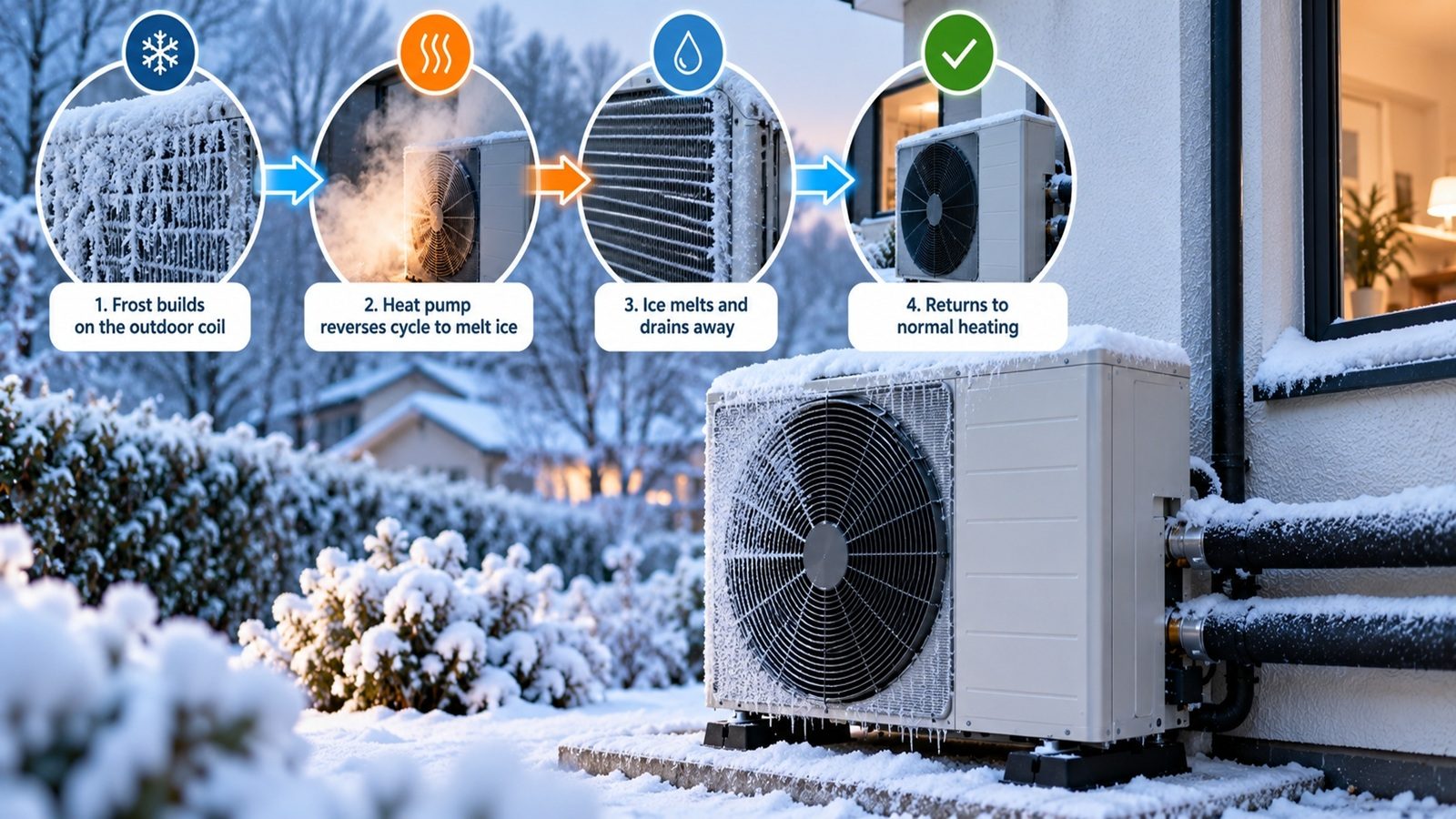
Air source heat pumps are designed to extract heat from outdoor air, even when temperatures fall during a typical British winter. However, cold and damp weather can cause frost to accumulate on the outdoor unit's heat exchanger. To maintain effective operation, many heat pumps use an automatic process known as a defrost cycle.
Understanding how heat pump defrost cycles work can help homeowners recognise normal winter operation, understand temporary changes in heating performance, and identify when a system may need attention.
At Infinity, we believe that understanding your renewable heating system helps you make informed decisions about comfort, efficiency, and maintenance throughout the year.
Why Do Heat Pumps Develop Frost in Winter?
An air source heat pump absorbs heat from outdoor air through a component called the evaporator coil. During heating operation, the coil can become colder than the surrounding air.
When moist air passes over the cold coil, water vapour can condense on its surface. If the coil temperature is below freezing, this moisture can turn into frost or ice.
Frost accumulation is particularly common during cool, damp weather when temperatures are around freezing. However, it can occur at other temperatures depending on humidity, airflow, and the heat pump's operating conditions.
As frost builds up, it restricts airflow across the coil and reduces heat transfer. If left unmanaged, excessive frost can affect heating performance and increase the energy required to operate the system.
What Is a Heat Pump Defrost Cycle?
A defrost cycle is an automatic process that removes accumulated frost from the outdoor heat exchanger.
Most air source heat pumps use sensors and control logic to determine when defrosting is necessary. Rather than running at fixed intervals in every condition, many systems initiate defrost when operating conditions indicate that frost is affecting performance.
The exact process varies by manufacturer and model, but the purpose is the same: to clear the outdoor coil so the heat pump can continue operating effectively.
Step 1: The System Detects Frosting Conditions
The heat pump monitors relevant operating conditions, which may include outdoor temperature, coil temperature, operating time, and other system measurements.
When the control system determines that defrosting is required, it initiates the cycle according to the manufacturer's operating strategy.
Step 2: The Refrigeration Cycle Changes
Many air source heat pumps use a reverse-cycle defrost method. During this process, a reversing valve changes the direction of refrigerant flow so that heat is transferred to the outdoor coil.
This warms the coil and melts the accumulated frost. The precise sequence and control arrangements depend on the equipment design.
Step 3: Frost Melts and Water Drains Away
As the outdoor coil warms, frost melts into water. This water should drain away through the heat pump's intended drainage openings.
During cold weather, some of the discharged water may freeze on the ground beneath or around the unit. Adequate clearance and suitable drainage are therefore important parts of installation planning.
Step 4: Normal Heating Resumes
Once the required defrost conditions are satisfied, the heat pump returns to normal heating operation.
Depending on the system, occupants may notice a brief change in heating output or a temporary interruption to space heating while the cycle takes place.
Does Defrosting Affect Heat Pump Efficiency?
Yes, defrosting requires energy and can temporarily reduce the heat available for heating the property. However, it is a necessary part of maintaining performance in conditions where frost develops.
Without effective defrosting, ice can restrict airflow, interfere with heat transfer, and make the system work harder.
Overall efficiency depends on several factors, including:
- Outdoor temperature and humidity.
- How frequently defrost cycles are required.
- The heat pump's design and control strategy.
- Airflow around the outdoor unit.
- The heating system's water temperature and controls.
- The quality of installation and ongoing maintenance.
A well-designed heat pump should manage defrosting automatically. Frequent defrosting during cold, damp weather is not necessarily a fault, but repeated or unusually prolonged cycles may warrant investigation.
What Is Normal During a Defrost Cycle?
Homeowners may notice several temporary changes when their heat pump defrosts.
Visible water or steam: Melting frost can produce water, while water vapour may appear as a white cloud in cold air. This is often normal and does not automatically indicate a refrigerant leak or equipment failure.
Temporary changes in sound: Fans, compressors, and refrigerant flow may sound different during the cycle. Some models stop the outdoor fan temporarily while defrosting.
Short-term heating changes: The system may temporarily deliver less heat to the property. How noticeable this is depends on the heat pump design and the heating system.
Water beneath the unit: Meltwater may collect below the outdoor coil before draining away. The area should be arranged to minimise persistent pooling and hazardous ice formation.
If the unit remains heavily iced, repeatedly fails to clear frost, or produces persistent error messages, consult a qualified heat pump engineer.
How Can You Help Your Heat Pump Operate Effectively in Winter?
Although defrosting is automatic, homeowners can take practical steps to support reliable operation.
Keep the Outdoor Unit Clear
Remove leaves, snow, and debris that obstruct airflow, following the manufacturer's guidance. Avoid placing objects directly around the unit or blocking its air intake and discharge.
Check Drainage
Ensure that water can drain away from the outdoor unit. Repeated ice build-up around the base may indicate a drainage issue that needs professional attention.
Maintain the Heating System
Follow the manufacturer's servicing recommendations and keep the heating controls configured appropriately. A qualified professional can check sensors, airflow, refrigerant-system operation, and defrost controls if problems arise.
Avoid Unnecessary Adjustments
Do not interrupt a normal automatic defrost cycle or attempt to remove ice using sharp tools, boiling water, or other methods that could damage the equipment. If substantial ice persists, arrange a professional inspection.
When Should You Be Concerned About Defrost Cycles?
Defrosting frequency varies with weather and equipment design, so there is no single interval that applies to every heat pump.
However, professional advice may be needed if:
- Thick ice remains on the coil after repeated defrost cycles.
- The heat pump frequently stops providing adequate heating.
- Error codes or warning indicators appear.
- Water repeatedly freezes in a way that obstructs the unit.
- Unusual noises continue after the defrost cycle finishes.
These symptoms can have several causes. An engineer should assess the equipment rather than assuming the defrost system itself is faulty.
Conclusion
Heat pump defrost cycles are an essential feature of air source heating systems operating in cold, damp UK weather. By melting frost from the outdoor heat exchanger, the process helps maintain airflow and supports continued heating performance.
Temporary steam, drainage water, and changes in sound or heating output can all occur during normal defrosting. Keeping the outdoor unit unobstructed, ensuring suitable drainage, and following recommended maintenance procedures can help support reliable winter operation.
At Infinity, we encourage homeowners to understand how their renewable heating equipment works and to seek professional advice when performance changes suggest a possible fault.
Considering an air source heat pump for your home? Contact Infinity to discuss your renewable heating requirements and explore suitable options for your property.
Ready to improve your home's energy efficiency?
Check your eligibility for grants and book a free survey with our team.
Book Free Survey