
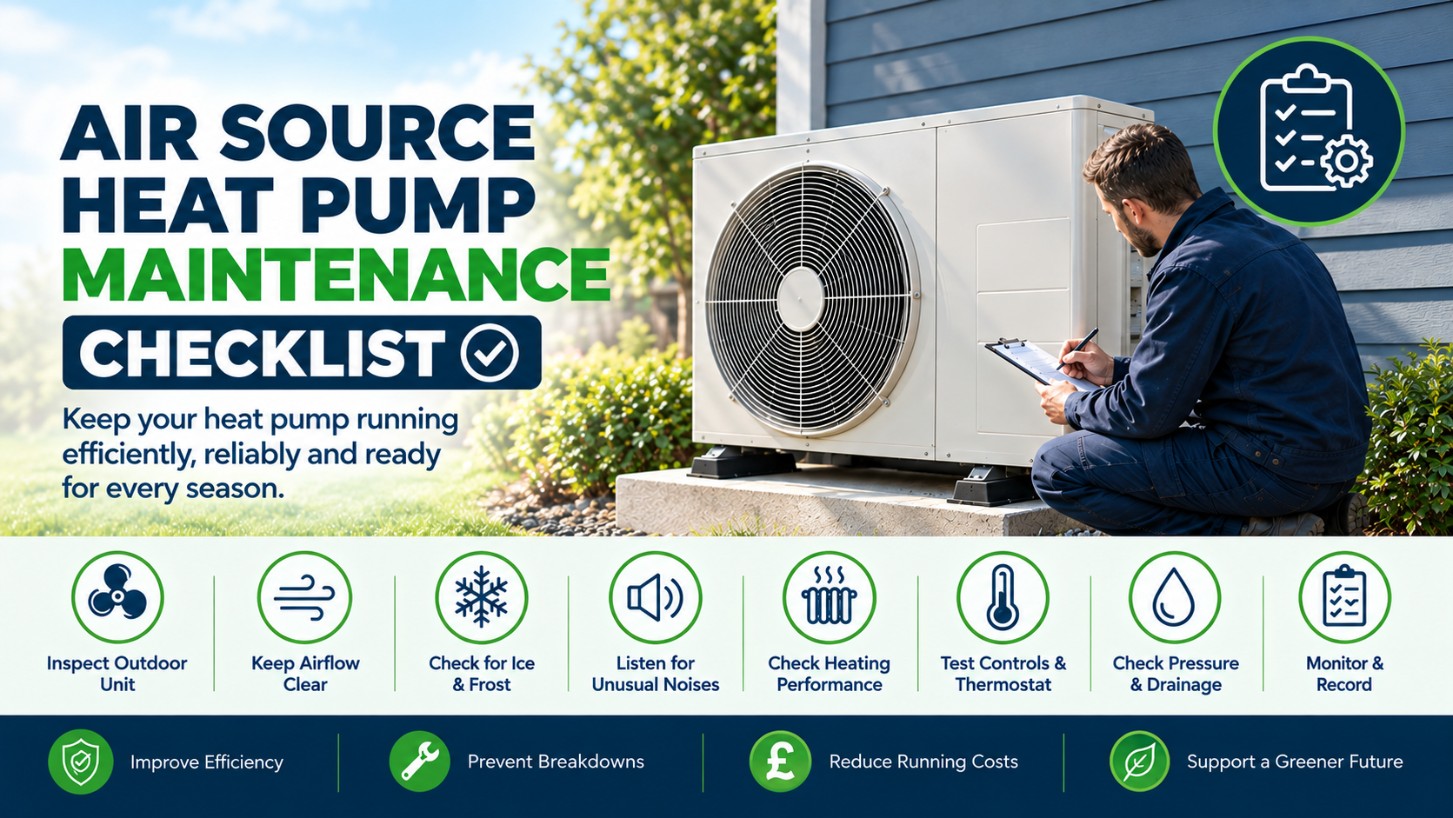
An air source heat pump can provide efficient heating and hot water throughout the year, but regular maintenance is important for reliable performance. Homeowners can complete basic checks, while servicing and repairs should be handled by an appropriately qualified professional.
This air source heat pump maintenance checklist covers the key checks London homeowners should consider throughout the year.
Why Does an Air Source Heat Pump Need Maintenance?
An air source heat pump transfers heat from outside air into your property. Its outdoor unit, fan, heat exchanger, controls, and heating system all need to operate correctly.
Regular maintenance can help you:
- Keep airflow around the outdoor unit clear
- Identify unusual noises or behaviour
- Monitor heating and hot water performance
- Spot visible leaks or damage
- Check controls and fault codes
- Support reliable operation during colder weather
Always follow the manufacturer's instructions, as systems vary.
Air Source Heat Pump Maintenance Checklist
1. Inspect the Outdoor Unit
Check that the air intake and outlet are clear. Remove loose leaves, grass and garden debris from around the unit, and keep nearby plants under control.
Do not remove covers or access internal components. Contact a professional if you notice damage or loose parts.
2. Keep Airflow Unrestricted
Do not place bins, boxes, garden equipment, or other objects directly beside the unit. Check it after windy weather or gardening work to ensure airflow remains unobstructed.
3. Check for Frost and Ice
Frost can form during cold weather and does not necessarily indicate a fault. Heat pumps have defrost cycles to remove frost.
Persistent or excessive ice may indicate an issue with airflow, drainage, or defrosting. Never break heavy ice with a tool. Contact a qualified professional if it does not clear normally.
4. Listen for Unusual Noise
Learn your system's normal operating sounds. The fan and compressor will produce some noise, which may change during defrosting.
Grinding, rattling, repeated banging, or unusually loud operations should be investigated if the change continues.
5. Check Heating Performance
Consider whether your home is heating normally. Colder rooms or significantly longer heating times may indicate an issue with the controls, circulation, insulation, heat emitters, or heat pump.
Persistent changes should be professionally assessed.
6. Check Radiators and Underfloor Heating
Heat pumps often operate at lower flow temperatures than conventional boilers, making efficient heat distribution important.
Keep radiators clear of furniture and curtains, and check that underfloor heating zones respond correctly. If rooms remain cold, have the system assessed rather than simply increasing the temperature.
7. Check Thermostats and Controls
Make sure thermostats respond correctly, heating schedules operate properly and hot water settings work as expected.
If you use smart controls, check the app or remote connection. Follow the manufacturer's guidance for operating the system.
8. Monitor System Pressure
Some systems use a pressurised wet heating circuit. If yours does, check the pressure according to the manufacturer's instructions.
There is no universal pressure reading for every installation. Repeated pressure loss should be investigated because it may indicate a leak or another fault.
9. Check Pipework and Drainage
Where accessible, look for leaks, corrosion, or damaged insulation. External pipework should have suitable protection against cold temperatures.
Heat pumps also produce water during normal operation and defrosting. Check that it drains correctly and look for unusual pooling. In freezing weather, poor drainage can create ice and become a hazard.
Never attempt to repair refrigerant pipework yourself. Specialist work should be handled by an appropriately qualified professional.
10. Monitor Energy Use and Error Codes
Energy consumption naturally changes with weather, occupancy, hot water demand and heating settings. A higher bill during colder weather does not automatically indicate a fault.
However, a significant unexplained increase that continues over time should be investigated.
If the system displays an error or warning code, record it and check the manufacturer's handbook. If the same fault keeps returning, do not repeatedly reset it. Recurring errors may require professional diagnosis.
What Should Professional Servicing Include?
Homeowner checks do not replace professional servicing. The exact procedure depends on the manufacturer, model, and installation.
A qualified professional may inspect the outdoor unit, heat exchanger, electrical connections, controls, pumps, filters, sensors, fan, defrost function, and pipework. Refrigerant-related equipment should also be checked where applicable.
Always follow the manufacturer's servicing requirements.
How Often Should a Heat Pump Be Serviced?
The correct interval depends on the manufacturer and installation. For many systems, annual professional servicing is a sensible routine alongside basic checks throughout the year.
Check your warranty documentation because some manufacturers have specific servicing requirements.
Seasonal Maintenance Routine
Spring: Clear debris, check drainage, and inspect for winter damage.
Summer: Continue basic checks and make sure hot water or cooling controls work correctly where applicable.
Autumn: Clear the outdoor unit, check heating schedules, and arrange servicing if due.
Winter: Monitor frost, drainage, unusual noises, and heating performance. Never cover the outdoor unit because it needs airflow.
When Should You Call a Professional?
Seek professional help if you notice:
- Repeated fault codes
- Loss of heating or hot water
- Recurring pressure loss
- Unusual mechanical noises
- Persistent excessive ice
- Water leaks
- Damaged electrical components
- Suspected refrigerant problems
- Significant unexplained energy increases
- Persistent reduced performance
Electrical work, refrigerant-related work, internal repairs, and complex adjustments should be handled by appropriately qualified professionals.
Frequently Asked Questions
Can I maintain an air source heat pump myself?
You can carry out basic visual checks, clear debris and monitor controls and performance. Technical servicing and repairs should be left to a qualified professional.
Should I remove ice from the outdoor unit?
No. Do not chip or scrape ice from the unit. Its defrost cycle should normally manage frost. Persistent ice should be professionally investigated.
Does an air source heat pump need annual servicing?
The required interval depends on the manufacturer. Annual servicing is sensible for many systems, but always follows the specific servicing and warranty requirements.
Why is my heat pump using more electricity?
Cold weather, increased hot water use and changed heating patterns can increase consumption. A substantial unexplained increase should be investigated.
Can I cover my heat pump in winter?
No. The outdoor unit needs unobstructed airflow. Follow the manufacturer's guidance instead.
Keep Your Heat Pump Reliable
Regular checks do not have to be complicated. Keeping the outdoor unit clear, monitoring controls and performance, and responding to unusual changes can support reliable operation.
By following a practical air source heat pump maintenance checklist and arranging professional servicing when required, London homeowners can help keep their heating system dependable throughout the year.
If you need professional advice about your heat pump or are considering a renewable heating solution, speak to Infinity today and get a free quote.
Ready to improve your home's energy efficiency?
Check your eligibility for grants and book a free survey with our team.
Book Free Survey