
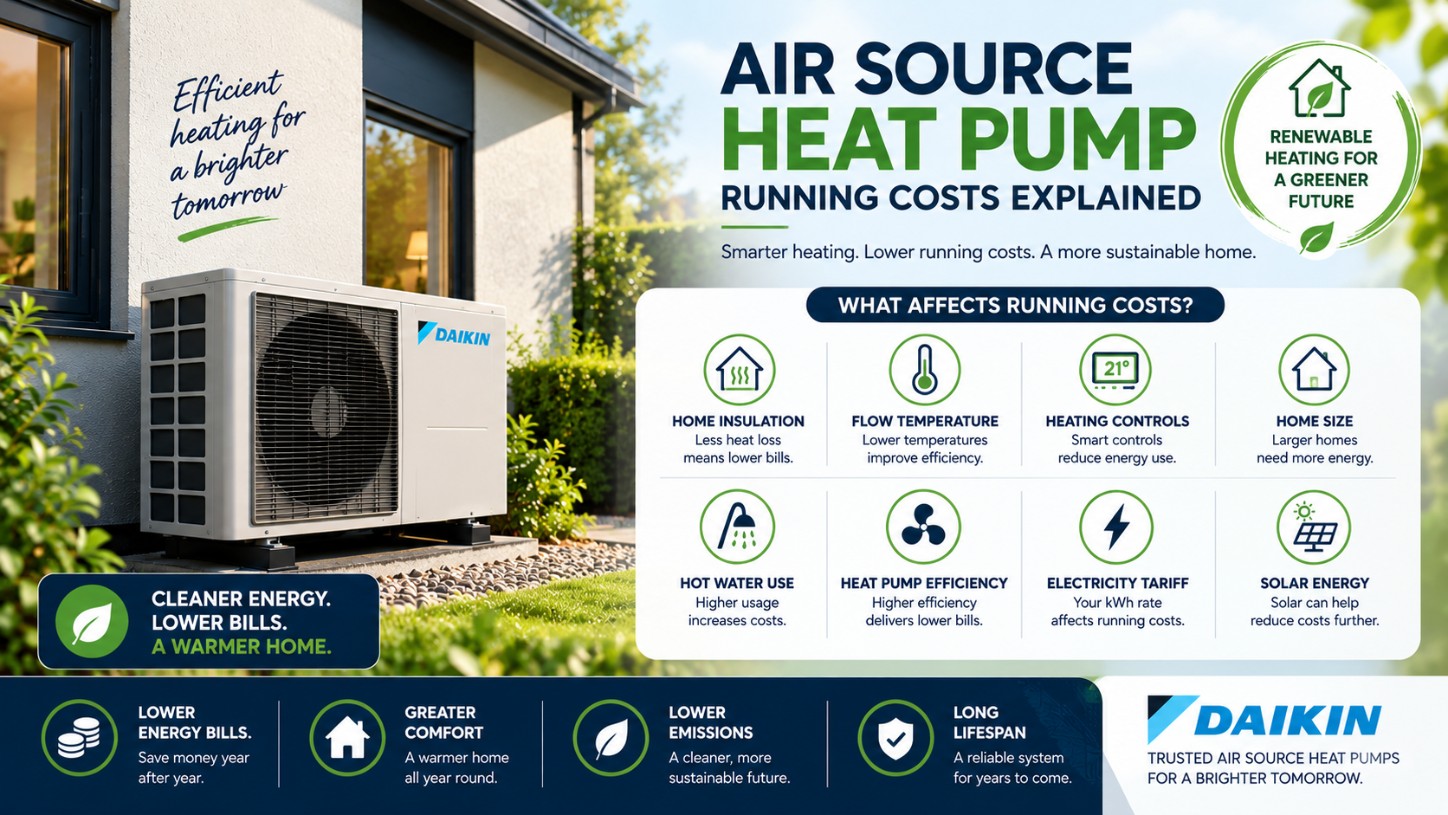
When choosing a heating system, installation cost is only part of the decision. Running costs are equally important when considering an air source heat pump.
Unlike a conventional boiler, an air source heat pump does not burn gas or oil to create heat. Instead, it uses electricity to extract heat from the outside air and transfer it into your home. Electricity consumption depends on the property's size, insulation, weather, heating system and how the equipment is operated.
For homeowners researching air source heat pump running costs, there is no single figure for every London property. A well-insulated home can have different energy requirements from an older property with significant heat loss.
Why Do Running Costs Vary?
Your property's heating requirement has a major effect on running costs. Important factors include:
- Property size and construction
- Insulation quality
- Windows and doors
- Number of occupants
- Indoor temperature
- Local weather
- Hot water usage
- Heating controls
- Heating system
- Heat pump efficiency
An estimate based on actual heat demand is more useful than a generic annual figure.
What Does COP Mean?
COP stands for Coefficient of Performance. It indicates how much heat a heat pump produces compared with the electricity it consumes under specific conditions.
COP changes with outdoor temperatures and the temperature required by the heating system, so seasonal performance provides a more realistic indication of overall energy consumption.
Why Does Heating Temperature Matter?
Heat pumps generally operate most efficiently at lower flow temperatures than traditional boilers. Existing radiators should therefore be assessed to ensure they can provide enough warmth.
Some homes may benefit from larger radiators, while underfloor heating can work well at lower temperatures. A professional heat-loss calculation can determine the heating requirement of each room and whether existing radiators are suitable.
Can Insulation Reduce Running Costs?
Yes. The better your home retains heat, the less energy the heating system needs to provide.
Loft, wall, and floor insulation can reduce heat loss, while suitable draught-proofing can limit unwanted air movement. Improving the building's energy efficiency alongside a heating upgrade can reduce overall heating demand, particularly in older London properties.
How Do Electricity Tariffs Affect Costs?
Because an air source heat pump uses electricity, your electricity tariff directly affects operating costs. Different suppliers and tariffs offer different unit rates, and some may have cheaper prices at particular times.
Reviewing your tariff can be worthwhile. However, a cheaper tariff cannot compensate for excessive heat loss or poor installation.
What Happens During Cold Weather?
During colder weather, your home needs more heat to remain comfortable. At the same time, the heat pump may need to work harder to extract heat from colder outdoor air.
Electricity consumption can therefore increase during winter. This is normal because heating demand rises as temperatures fall. The key consideration is whether the system is correctly sized for the property's heat demand.
How Much Hot Water Does Your Home Need?
If the heat pump also provides domestic hot water, household usage will affect electricity consumption. Factors include occupants, water usage, cylinder size, temperature and heating schedules.
Some systems may also use an immersion heater for specific hot water requirements, adding to electricity consumption.
Heat Pump vs Gas Boiler Running Costs
Comparing electricity and gas prices alone does not provide a meaningful comparison.
A boiler burns fuel to generate heat, while a heat pump transfers heat from outside air using electricity. The outcome depends on boiler efficiency, heat pump performance, energy prices, property heat demand, insulation, controls and hot water requirements.
For a fair comparison, expected annual energy consumption should be estimated for both systems based on the same property.
How Can You Keep Running Costs Under Control?
Several practical measures can help your heat pump operate efficiently:
Reduce Heat Loss: Check your loft, walls, floors, windows and external doors for areas where heat may escape.
Use Suitable Flow Temperatures: Configure the system to provide comfortable heating without unnecessarily high water temperatures.
Understand Your Controls: Learn how your heating controls work and follow your installer's recommendations.
Keep the Outdoor Unit Clear: Remove leaves, garden waste, snow and other objects that could restrict airflow.
Maintain the System: Follow the manufacturer's maintenance recommendations and investigate unusual noises, error messages or changes in heating performance.
Does Installation Quality Affect Running Costs?
Yes. Correct system design and installation can have a significant effect on efficiency.
A professional installer should consider heat loss, heating emitters, hot water requirements and controls. Correct sizing is also essential.
An air source heat pump should therefore be treated as a complete heating system rather than simply an outdoor unit installation.
How Infinity Can Help
At Infinity, we understand that every property has different heating requirements. Building construction, insulation and the existing heating system can all influence running costs.
Our approach helps homeowners understand their energy needs and choose suitable heating solutions. Professional advice can support a more informed decision.
Conclusion
Air Source Heat Pump Running Costs depend on much more than the price of electricity. Heat loss, insulation, flow temperature, radiator performance, hot water usage, weather, controls and installation quality can all influence electricity consumption.
Rather than relying on a generic annual figure, homeowners should assess their property's heating requirements and ensure the system is designed around those needs.
With suitable insulation, correct system design, sensible controls and regular maintenance, an air source heat pump can provide an efficient and comfortable heating solution for London homes while supporting long-term energy efficiency.
Ready to improve your home's energy efficiency?
Check your eligibility for grants and book a free survey with our team.
Book Free Survey