
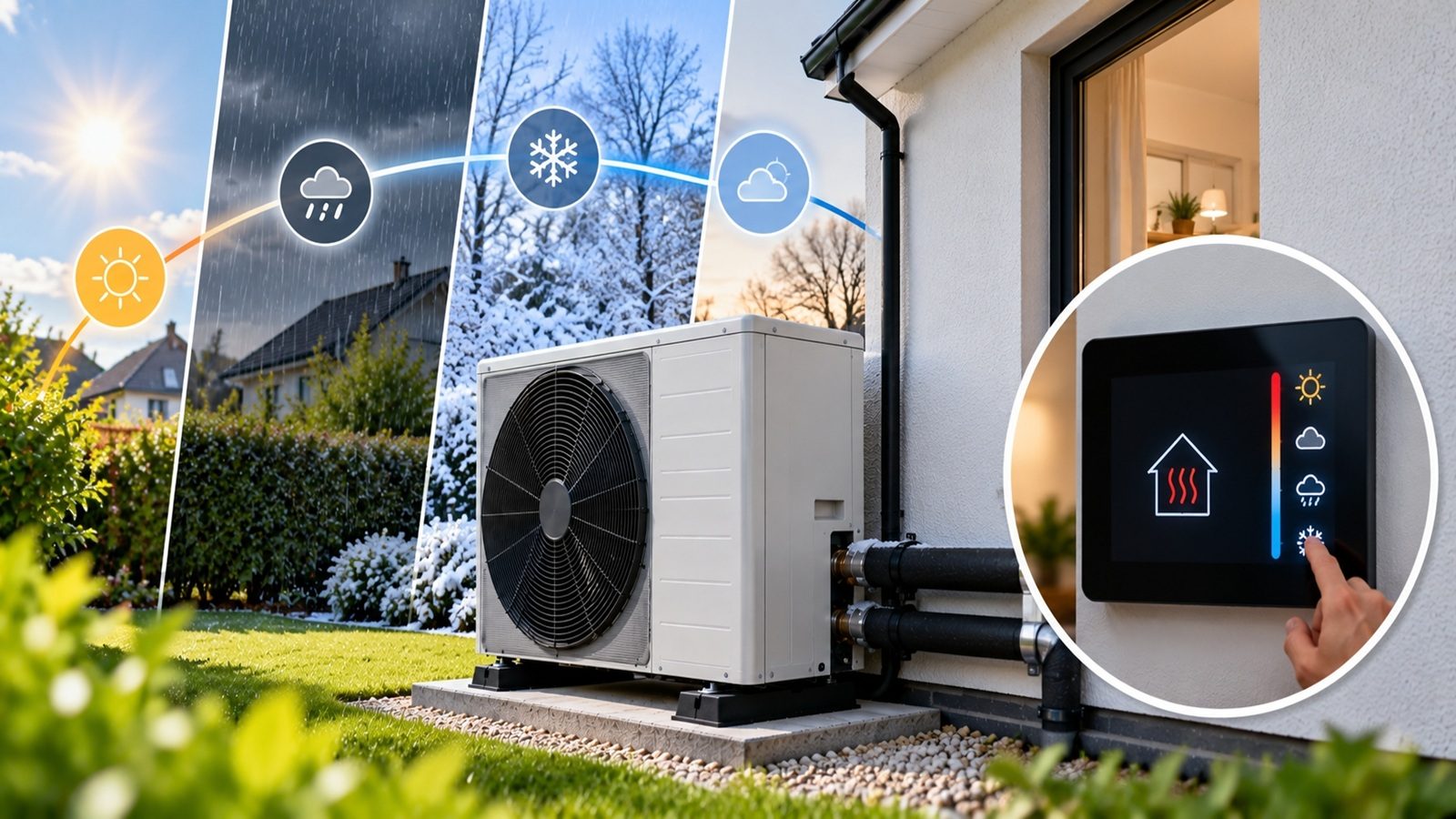
Weather compensation is an important feature of many modern air source heat pump systems. It helps a heat pump adjust its heating output to suit changing outdoor temperatures, supporting consistent indoor comfort and efficient operation. For UK homeowners, understanding how weather compensation works can make it easier to get the best from a heat pump throughout the year.
Whether you already have an air source heat pump or are considering installing one, knowing how to use weather compensation can help you understand your heating controls, avoid unnecessary adjustments, and make informed decisions about system performance.
What Is Weather Compensation in an Air Source Heat Pump?
Weather compensation is a control function that adjusts the temperature of the water circulating through a heating system according to the outdoor temperature.
When the weather is mild, a home generally needs less heat to maintain a comfortable indoor temperature. When the temperature outside falls, the heating system may need to supply warmer water to meet the home's heat demand.
Rather than operating at one fixed flow temperature, a heat pump with weather compensation uses a heating curve to determine an appropriate water temperature for the current conditions.
The aim is to provide enough heat to keep the property comfortable without making the system work harder than necessary.
How Does Weather Compensation Work?
Weather compensation relies on an outdoor temperature sensor and the heat pump's control settings. Depending on the system, the controller may also use indoor temperature information or other settings.
The process typically works as follows:
- The outdoor temperature is measured. A sensor monitors conditions outside the property.
- The controller checks the heating curve. This curve defines the relationship between outdoor temperature and the required heating water temperature.
- The flow temperature is adjusted. The system raises or lowers the temperature of the water sent to radiators or underfloor heating.
- The heating system responds to demand. Heat is delivered at a temperature intended to maintain comfort while supporting efficient operation.
For example, during a relatively mild day, the system may be able to heat the home using cooler water. During colder weather, it may need a higher flow temperature.
The exact temperatures depend on the property's heat loss, the size and type of heat emitters, insulation levels, and the manufacturer's settings. There is no single heating curve that suits every home.
Why Is Weather Compensation Important for Heat Pump Efficiency?
Air source heat pumps generally operate more efficiently when they can deliver heat at lower flow temperatures. Producing hotter water usually requires the compressor to work harder, which can reduce the system's coefficient of performance (COP).
Weather compensation helps avoid unnecessarily high flow temperatures when outdoor conditions do not require them.
Its potential benefits include:
1. Improved energy efficiency
By matching the heating water temperature more closely to the home's heat demand, weather compensation can help reduce avoidable energy use. The actual improvement depends on the system's design, settings, and how the household uses its heating.
2. More consistent indoor comfort
Instead of repeatedly switching between very hot water and periods without enough heat, a suitably configured system can provide steadier heating. This is particularly useful when a home benefits from longer, more consistent heating periods.
3. Potentially lower running costs
Better control of flow temperature can support efficient operation and may reduce electricity consumption. However, savings are not guaranteed: insulation, electricity tariffs, heat pump performance, and household heating habits all influence running costs.
4. Less need for manual adjustment
Once the heating curve has been properly configured, the system can respond automatically to outdoor temperature changes. Homeowners may not need to keep altering the flow temperature as the weather changes.
What Is a Heating Curve?
The heating curve is central to weather compensation. It tells the controller what flow temperature to target at different outdoor temperatures.
A steeper curve generally means the system increases its flow temperature more quickly as the outdoor temperature falls. A flatter curve generally means a smaller increase.
If the curve is too high, the system may produce hotter water than the property needs, potentially reducing efficiency. If it is too low, rooms may struggle to reach the desired temperature during colder weather.
The correct curve depends on factors such as:
- The property's insulation and heat loss.
- Radiator sizes and their ability to emit heat at lower temperatures.
- Whether the home uses radiators, underfloor heating, or both.
- The heat pump's design and manufacturer recommendations.
- Household comfort preferences and heating schedules.
Adjustments should be made gradually, allowing enough time to assess the effect on indoor comfort.
How to Optimise Weather Compensation Settings
Getting the settings right can take some observation, especially during the first heating season.
Start with the installer's settings.
Begin with the heating curve and controls configured during commissioning. These settings should reflect the property's heating requirements and the manufacturer's instructions.
Keep heating patterns reasonably consistent.
Heat pumps often work well when maintaining a relatively steady indoor temperature rather than repeatedly recovering from large temperature drops. The best schedule depends on the home, system design, and household routine.
Monitor room temperatures
If rooms remain comfortable in mild weather but become too cool during colder periods, the heating curve may need adjustment. If the home becomes consistently too warm, the curve may be higher than necessary.
Change one setting at a time
Avoid making several changes together. Adjusting one parameter at a time makes it easier to understand what improves comfort and performance.
Check the wider heating system
Weather compensation cannot resolve every heating problem. Poor insulation, incorrectly balanced radiators, restricted water flow, unsuitable emitter sizes, or control faults may affect performance. Persistent issues should be investigated by a qualified heating professional.
Common Weather Compensation Mistakes to Avoid
Some settings and habits can prevent weather compensation from delivering its intended benefits.
Setting the flow temperature too high: Higher temperatures may be unnecessary during milder weather and can reduce efficiency.
Changing settings too frequently: Heat pumps and buildings respond over time. Constant adjustments can make it difficult to judge whether a change has helped.
Ignoring cold rooms: A room that remains cold may have a heat-loss or heat-emitter issue rather than simply needing a higher heating curve.
Using large temperature setbacks without checking suitability: Deep setbacks can require a longer recovery period. The most appropriate schedule depends on the property's thermal performance and the heat pump's controls.
Assuming every home needs the same curve: A well-insulated property with underfloor heating will have different requirements from an older home with radiators.
Does Weather Compensation Work with Radiators and Underfloor Heating?
Yes, weather compensation can be used with both radiators and underfloor heating, provided the heat pump and controls support the arrangement.
Underfloor heating typically operates with lower water temperatures because it distributes heat across a large surface area. Radiator systems may require higher temperatures, particularly where emitters were originally designed for a conventional boiler.
However, radiator systems can also operate efficiently at lower temperatures if the radiators are adequately sized and the property's heat loss has been addressed.
The heating curve must be suitable for the installed emitters and the home. Mixed systems may need additional controls to manage different temperature requirements.
Can Weather Compensation Help You Qualify for the Boiler Upgrade Scheme?
Weather compensation and the Boiler Upgrade Scheme (BUS) serve different purposes. Weather compensation is a heating control strategy, while BUS is a government grant scheme that can help eligible property owners with the upfront cost of installing certain low-carbon heating systems.
The scheme has offered grants of up to £7,500 for eligible air source heat pump installations in England and Wales. However, the amount available, eligibility conditions, and application rules can change, so homeowners should check the latest official guidance before making financial decisions.
Weather compensation is not, by itself, a route to grant eligibility. A property and installation must meet the scheme's applicable requirements, and the installation process must follow the relevant rules.
If you are considering replacing a fossil-fuel heating system with an air source heat pump, ask your installer whether the proposed installation may qualify for BUS support. Confirm the current grant terms and any contribution you may need to pay before proceeding.
When Should You Ask a Professional to Check Your Settings?
Professional advice is worthwhile if your home consistently feels too cold or too warm, energy consumption seems unexpectedly high, or the heat pump frequently struggles to maintain the desired temperature.
An experienced installer can review the heating curve, system flow, controls, heat emitters, and commissioning settings. They can also check whether any underlying issue is affecting performance.
Avoid changing installer-level or advanced settings without understanding their purpose. Follow the manufacturer's guidance, and arrange a qualified inspection if you suspect a fault.
Conclusion
Weather compensation helps an air source heat pump adapt its flow temperature to changing outdoor conditions. When configured correctly, it can support efficient operation, consistent comfort, and potentially lower running costs.
The key is to use a heating curve suited to the property, make gradual adjustments, and consider the performance of the entire heating system rather than focusing on one setting alone.
For homeowners exploring a new heat pump, it is also worth understanding available financial support. The Boiler Upgrade Scheme may help eligible households with installation costs, subject to current scheme requirements.
Thinking about an air source heat pump for your property? Contact Infinity to discuss your heating requirements, explore suitable installation options, and find out whether you may be eligible for support under the current Boiler Upgrade Scheme rules.
Ready to improve your home's energy efficiency?
Check your eligibility for grants and book a free survey with our team.
Book Free Survey