
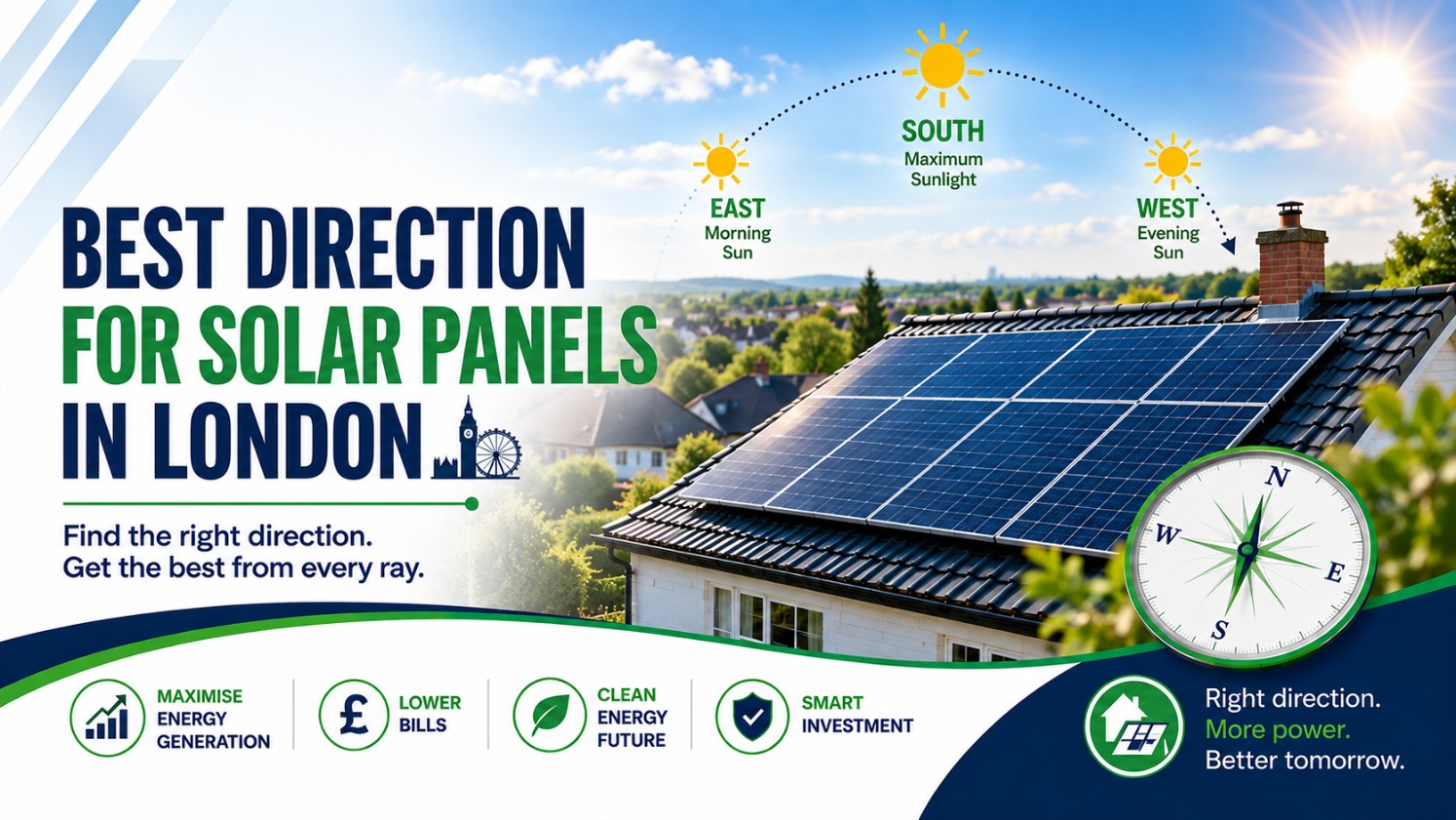
Choosing the right direction can affect how effectively a solar PV system captures sunlight. Although London receives less sunshine than warmer countries, correctly positioned solar panels can still generate useful renewable electricity.
So, what is the best direction for solar panels in London?
A south-facing roof is generally preferred because it provides good sunlight exposure throughout the day. However, east and west-facing roofs can also be suitable. The best option depends on roof orientation, shading, pitch, and household energy usage.
Why Does Solar Panel Direction Matter?
Solar panels generate electricity when sunlight reaches their photovoltaic cells. The amount and timing of sunlight can vary depending on the direction the panels face.
In London, the sun generally travels across the southern part of the sky, so south-facing panels can receive strong sunlight across much of the day.
However, direction is not the only factor. A south-facing roof with significant shading may perform less effectively than a clear east or west-facing roof. A professional assessment should consider the complete installation.
Is the South the Best Direction for Solar Panels?
For many London properties, south-facing is generally the preferred direction for solar panels.
A south-facing array can receive sunlight throughout the day, making it a strong option for homeowners looking to maximise overall generation.
However, not every south-facing roof is automatically ideal. Roof pitch, shading, available space, and roof condition should also be considered.
What About South-East and South-West Roofs?
A roof does not need to face exactly south to be suitable for solar panels.
South-east and south-west-facing roofs can both provide good solar exposure. A south-east-facing system generally receives more sunlight earlier in the day, while a south-west-facing system can receive more sunlight later in the afternoon.
These orientations should be considered as part of the overall system design.
Are East-Facing Solar Panels Worth Installing?
Yes. East-facing solar panels can be a practical option for many homes.
An east-facing system receives more sunlight during the morning. This may suit households that use significant electricity earlier in the day, such as when preparing breakfast, using kitchen appliances or working from home.
East-facing panels may produce less annual electricity than an optimally positioned south-facing system, but can still provide useful renewable energy.
Are West-Facing Solar Panels Suitable?
Yes. West-facing panels can also be useful, particularly for households that use more electricity during the afternoon and evening.
A west-facing array tends to receive more sunlight later in the day. This can help align solar generation with household electricity use after work or school.
For homes with battery storage, electric vehicles or higher afternoon demand, generation timing can be important.
What About North-Facing Solar Panels?
North-facing roofs are generally less favourable for solar PV in London because they receive less direct sunlight than south-facing roofs.
However, roof pitch, location, shading, and system design can affect whether an installation is practical.
Where suitable south, south-east, south-west, east, or west roof space is available, these options would normally be considered first.
Does Roof Pitch Matter?
Yes. Direction is only one part of solar panel performance. Roof pitch affects the angle at which sunlight reaches the panels.
Many London homes already have pitched roofs that provide a suitable angle for solar installations. For flat roofs, mounting systems may sometimes be used to position panels appropriately.
Structure, wind loading, spacing, and shading should also be considered.
Why Is Shading Important?
Shading is one of the most important factors when planning a solar installation.
Trees, chimneys, neighbouring buildings, and other obstacles can block sunlight from reaching the panels.
A clear east or west-facing roof may therefore be more useful than a heavily shaded south-facing roof. A site survey should consider how shadows change throughout the day and across seasons.
Can Solar Panels Face Different Directions?
Yes. Some properties can benefit from using both east and west-facing roof areas.
This arrangement can spread solar production across a longer period, which may suit households with morning and afternoon electricity demand.
The inverter and overall system should be designed appropriately for panels operating in different orientations.
How Do You Find the Best Direction for Your Property?
Before choosing a solar installation, consider:
- Roof orientation
- Shading from trees or buildings
- Roof pitch
- Roof condition
- Household electricity usage
- Available roof space
- Future energy needs, including batteries or EV charging
A professional assessment can bring these factors together and estimate the expected performance of your solar system.
What Is the Best Direction for Solar Panels?
For most London properties, south-facing remains a strong choice when the aim is to maximise overall solar exposure. South-east and south-west roofs can also be highly suitable, while east- and west-facing systems can provide valuable electricity at different times of the day.
The best direction is not determined by compass direction alone. Roof pitch, shading, available space, electricity consumption, and system design all matter.
Choose the Right Solar Position for Your Property
The right solar panel direction can help you make better use of your roof and maximise your renewable energy system.
Infinity can assess your roof orientation, energy requirements, and available options to find a suitable solar solution.
Get in touch with Infinity to discuss your solar installation and find the right direction for your panels. South is preferred, but east, west, south-east, and south-west can also work. The right choice depends on your property and energy use.
Ready to improve your home's energy efficiency?
Check your eligibility for grants and book a free survey with our team.
Book Free Survey