
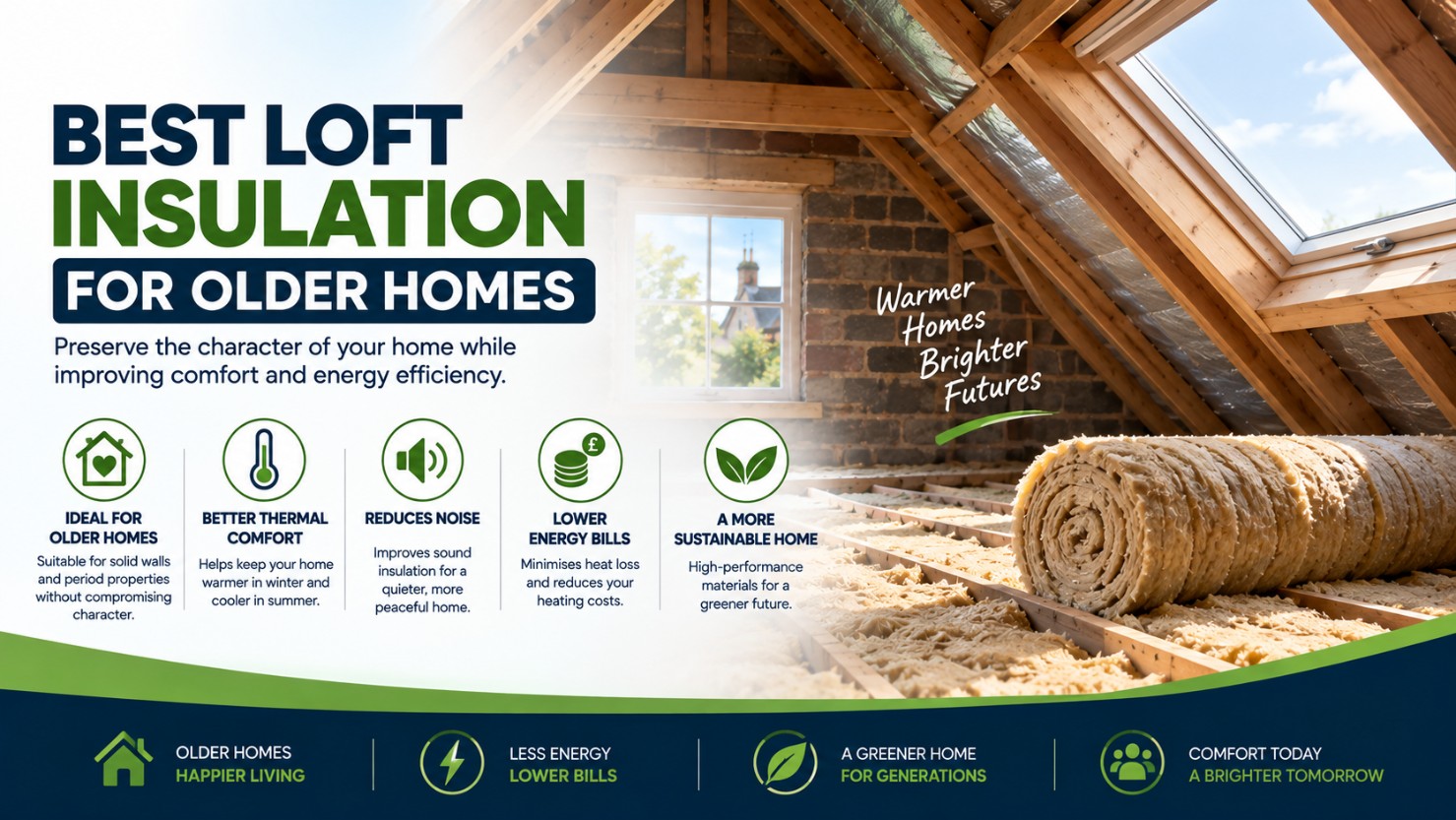
Older homes have plenty of character, but many were built before modern energy-efficiency standards. As a result, they can lose significant heat through the roof, leading to higher heating bills and less comfortable rooms.
Choosing the best loft insulation can help reduce heat loss, improve comfort, lower energy consumption, and support a better EPC rating. However, the right material depends on factors such as the property's age, roof construction, ventilation, and moisture control.
Why Older Homes Need Effective Loft Insulation
Many older properties have little or no roof insulation. Existing insulation may also be outdated, compressed, or damaged.
Effective loft insulation can help:
- Reduce heat loss
- Lower heating bills
- Improve indoor comfort
- Reduce condensation and damp
- Support a better EPC rating
- Lower carbon emissions
Loft insulation is also one of the most cost-effective ways to improve energy efficiency without major structural changes.
What Should You Consider Before Insulating?
Roof Condition
Check for leaks, missing tiles, or damaged timbers before installation. Existing problems should be repaired first.
Ventilation
Good airflow is important in older homes to help control condensation. Roof ventilation should not be blocked by insulation.
Existing Insulation
Inspect existing insulation to determine whether it can be topped up or needs replacing.
Loft Usage
If your loft is used for storage or is being converted into living space, a different insulation approach may be required.
Mineral Wool Insulation
Mineral wool is one of the most popular choices for London homes.
Benefits
- Good thermal performance
- Effective acoustic insulation
- Non-combustible
- Cost-effective
- Easy to install between loft joists
It can often be installed over existing insulation to improve thermal performance.
Fibreglass Loft Insulation
Fibreglass has been widely used in London homes for many years.
Advantages
- Affordable
- Readily available
- Lightweight
- Effective at reducing heat loss
- Suitable for many accessible lofts
Modern products are easier to handle than older versions, although suitable protective equipment should still be used during installation.
Sheep's Wool Insulation
Sheep's wool is increasingly popular for period and traditional properties.
Why Choose Sheep's Wool?
- Naturally breathable
- Good moisture management
- Helps regulate humidity
- Long-lasting
Its breathable properties can make it suitable for older buildings where moisture management is important.
Rigid Insulation Boards
Rigid insulation boards provide high thermal performance while taking up less space than traditional insulation rolls.
They can be useful for:
- Loft conversions
- Room-in-roof insulation
- Limited-space applications
- Projects requiring higher insulation performance
Professional installation can help ensure correct fitting and minimise thermal bridging.
Recycled Insulation Materials
Homeowners looking for sustainable options can consider insulation made from recycled paper, denim, or other fibres.
Benefits can include:
- Lower environmental impact
- Good thermal performance
- Sustainable manufacturing
- Reduced waste
Should You Replace or Top Up Existing Insulation?
Many older properties already have loft insulation. Whether to replace or top it up depends on its condition.
Topping Up May Be Suitable When:
- Existing insulation is dry
- It is evenly distributed
- There is no pest damage
- The material remains in good condition
Replacement May Be Needed When:
- Insulation is water damaged
- Mould is present
- Rodents have contaminated it
- It is badly compressed
- The material has significantly deteriorated
A professional inspection can help determine the right approach.
Common Mistakes to Avoid
Avoid these mistakes when installing loft insulation:
- Blocking roof ventilation
- Compressing insulation with heavy storage
- Ignoring roof leaks
- Leaving gaps between insulation
- Using unsuitable materials
- Covering electrical cables incorrectly
- Failing to inspect insulation
Correct installation is essential for long-term performance.
Can Loft Insulation Help Reduce Damp?
It can help when correctly installed, but loft insulation is not a cure for existing damp problems.
Poor ventilation or existing moisture issues can contribute to condensation. Maintaining suitable airflow alongside insulation helps protect the roof structure and improve energy efficiency.
Other Ways to Improve Energy Efficiency
Loft insulation can work effectively alongside other improvements, including:
- Draught-proofing doors and windows
- Upgrading heating controls
- Insulating hot water pipes
- Improving suitable glazing
- Installing floor insulation
- Adding cavity wall or external wall insulation where appropriate
Combining improvements can deliver greater overall energy savings.
Benefits of Choosing the Right Loft Insulation
Choosing suitable loft insulation can provide:
- Lower energy bills
- Improved indoor comfort
- Reduced heat loss
- Better temperature control
- Potentially improved property value
- Better EPC performance
- Reduced carbon emissions
- Long-lasting insulation performance
- Better protection against condensation
How Infinity Helps Homeowners
At Infinity, we understand that every older property is different. Our experienced team assesses your home's construction, existing insulation, and ventilation before recommending a suitable loft insulation solution.
Whether you're replacing aging insulation or installing it for the first time, we use quality materials and professional installation methods to help improve comfort, reduce energy bills, and support long-term energy efficiency.
Conclusion
Choosing the best loft insulation for an older home involves more than selecting the thickest material. Roof condition, ventilation, moisture control, and property type all influence which solution is most suitable.
With appropriate materials and professional installation, homeowners can create a warmer, more comfortable, and energy-efficient home while protecting its character and condition. Investing in quality loft insulation can provide lower heating costs and lasting energy savings for years to come.
Ready to improve your home's energy efficiency?
Check your eligibility for grants and book a free survey with our team.
Book Free Survey