
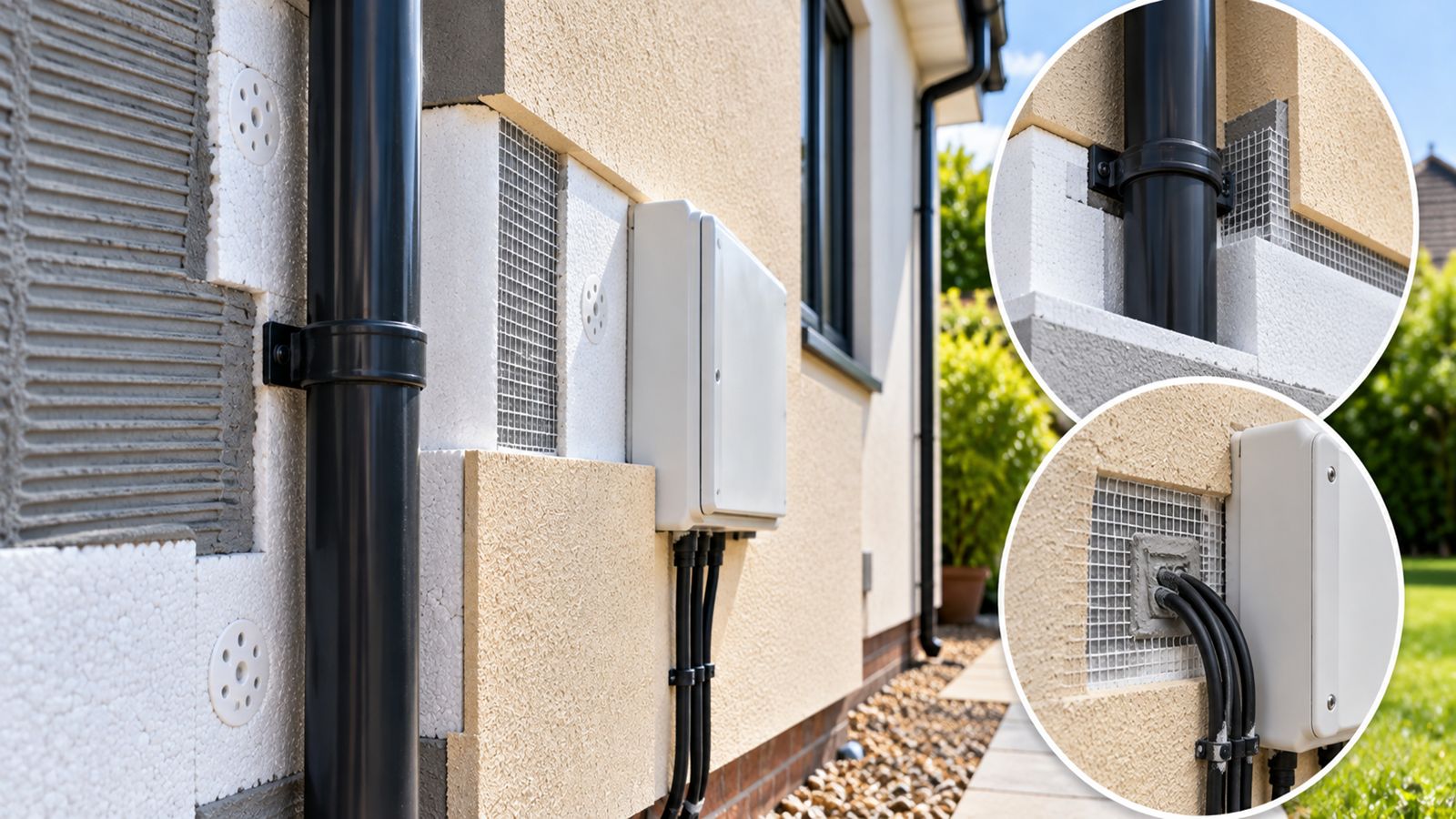
External wall insulation (EWI) can usually be planned around existing pipes and cables, but the details need to be checked before installation begins. Pipes, drainpipes, cable runs, meters, vents, and wall-mounted equipment can all affect how insulation is fitted and finished.
The aim is to create a continuous insulation layer while keeping services safe, accessible, and properly secured. The right approach depends on the type of service, its position, and the requirements of the chosen EWI system.
Can EWI Be Installed Around Existing Pipes and Cables?
In many cases, yes. An installer can assess the services on the outside wall and decide how each one should be managed. Some items may be carefully worked around, while others may need temporary removal, repositioning, or suitable extensions before the insulation is fitted.
There is no single method that suits every property. The installer should follow the EWI system guidance and take account of relevant safety requirements. Do not assume that pipes and cables can simply be covered by insulation or render.
What Should Be Checked Before Work Starts?
A survey before installation helps identify potential problems and plan the necessary work.
Drainpipes and Rainwater Pipes
Downpipes and other rainwater fittings may need to be removed and refitted further out from the wall to allow for the added insulation thickness. Their brackets, joints, and connections should be suitable for the finished wall position.
The installer should also consider access for future maintenance and ensure that rainwater can drain correctly.
Gas and Water Pipes
Gas and water pipes need careful assessment before any changes are made. Their position, support, access, and clearances must be considered, and work should be carried out by an appropriately qualified professional where required.
Never move, alter, or enclose a gas pipe without suitable professional advice. Any changes must meet the relevant safety requirements.
Electrical Cables and Equipment
External cables, meter boxes, lights, sockets, and other electrical equipment can affect how the insulation is installed. Some items may need suitable extensions or repositioning so they remain accessible and function correctly after the wall becomes thicker.
Electrical work should be assessed and carried out by a competent electrician where needed. Cables should not be trapped, damaged, or covered in a way that creates a safety or maintenance problem.
Vents, Flues, and Other Openings
Air vents and flues must not be blocked by insulation or render. Their position and required clearances should be checked before work starts, particularly where they serve heating appliances or ventilation systems.
Get advice from a suitably qualified professional where a flue, combustion appliance, or ventilation opening may be affected.
How Does Insulation Thickness Affect Pipes and Cables?
EWI adds a new layer to the outside of the wall. This means existing pipes, cable entries, brackets, and fittings may sit closer to the finished surface or become partly obstructed if they are not planned for.
The installer should calculate the finished wall depth and check whether fittings need longer fixings, new brackets, extensions, or relocation. The correct solution depends on the service and the system design.
Can Pipes and Cables Be Covered by EWI?
Not automatically. Some service routes may be accommodated within the planned details, but services must remain safe and suitable for their intended use. Items that need inspection, operation, ventilation, or future access should not be made inaccessible.
The EWI system must also be detailed carefully around penetrations through the insulation. Poorly finished gaps can allow water to enter or interrupt the insulation layer. Follow the system manufacturer's instructions for sealing and finishing around pipes and cables.
Who Is Responsible for Moving Existing Services?
Responsibilities depend on the work required and the people carrying it out. An EWI installer may coordinate the work, but specialist tasks involving gas, electricity, or other regulated services may require the relevant qualified tradesperson or service provider.
Before accepting a quotation, ask who will assess and move any affected services, whether this work is included in the price, and who will refit and test the equipment afterwards.
Questions to Ask Your EWI Installer
Before the project begins, ask:
- Have all external pipes, cables, meters, vents, and fittings been included in the survey?
- Which items need to be removed, extended, or repositioned?
- Who will carry out specialist gas or electrical work?
- Will meters, valves, vents, and other equipment remain accessible?
- How will the insulation be sealed around service penetrations?
- Are service alterations included in the quotation?
- Who will check the completed work?
Getting clear answers early can help reduce delays and unexpected costs during installation.
Common Mistakes to Avoid
Avoid covering services without checking whether they need access or maintenance. Do not block vents or flues, and do not allow unqualified people to alter gas or electrical installations.
It is also important not to leave gaps around pipes and cables or rely on improvised sealing methods. The finish should follow the EWI system guidance and be suitable for the specific detail.
Frequently Asked Questions
Does EWI Mean All External Pipes Must Be Moved?
No. Some pipes may be managed in place, while others need to be removed, extended, or repositioned. The decision depends on their location, the added insulation thickness, and access requirements.
Can External Cables Stay in Place During EWI Installation?
Sometimes, but each cable and fitting needs to be assessed. Electrical work or repositioning should be handled by a competent professional where required.
Can EWI Cover a Gas Pipe?
Do not assume a gas pipe can be covered. It must be assessed by an appropriately qualified professional, and any changes must comply with relevant safety requirements.
Will Moving Pipes and Cables Increase the Cost?
It can. Costs depend on the number of services affected and the work needed. Ask for these tasks to be identified clearly in the quotation.
Plan Service Details Before Installing EWI
External wall insulation can often be installed on homes with existing pipes and cables, provided these details are assessed and managed correctly. A pre-installation survey, suitable specialist support, and careful detailing can help protect safety, access, and the performance of the finished system.
Discuss all external services with your EWI installer before work starts, and make sure the planned approach follows the system manufacturer's guidance.
Ready to improve your home's energy efficiency?
Check your eligibility for grants and book a free survey with our team.
Book Free Survey