
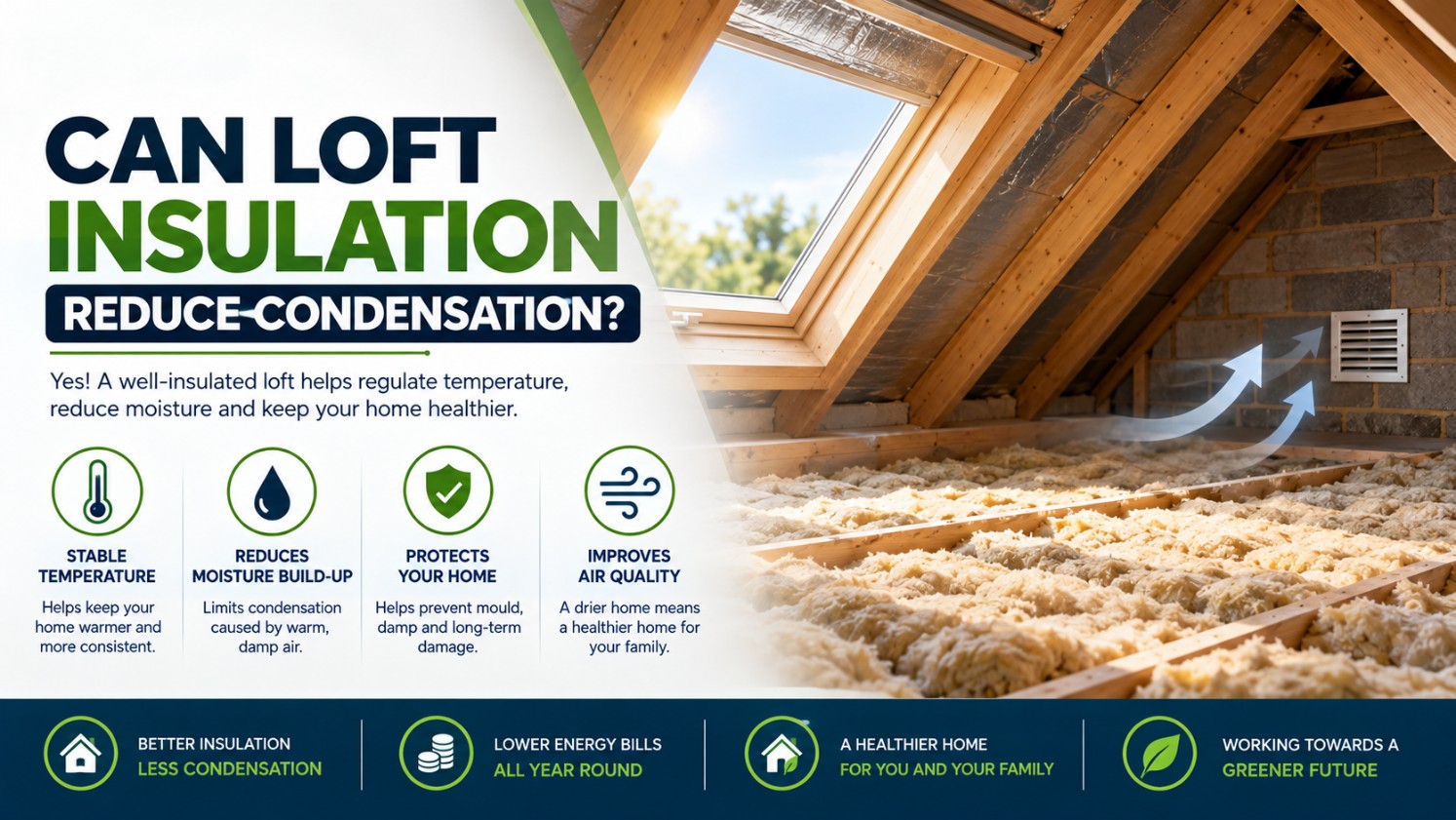
Condensation is a common issue in many London homes, particularly during the colder months when heating systems are used more frequently. You may notice water droplets on your windows, damp patches on ceilings, peeling wallpaper, or even black mould appearing around walls and corners. While many people assume these problems are caused by poor ventilation alone, inadequate insulation can also play a significant role.
So, can loft insulation help? The answer is yes. Loft insulation can reduce the conditions that allow condensation to form by keeping your home warmer and reducing heat loss through the roof. However, insulation is only one part of the solution. When combined with good ventilation and proper moisture control, it can help create a healthier, more comfortable, and energy-efficient home.
In this guide, we'll explain what condensation is, why it develops, how loft insulation helps, and what homeowners can do to prevent condensation problems throughout the year.
What Is Condensation?
Condensation occurs when warm, moisture-filled air comes into contact with a colder surface. As the warm air cools, it can no longer hold the same amount of moisture, causing tiny water droplets to form.
This is why condensation often appears on the following:
- Windows
- Ceilings
- External walls
- Roof timbers
- Mirrors
- Cold corners of rooms
Moisture inside your home is created through everyday activities such as cooking, showering, washing clothes, drying laundry indoors, and even breathing. Without enough ventilation, this moisture builds up and increases the likelihood of condensation.
Why Is Condensation So Common in London Homes?
The London climate makes condensation a frequent problem. Cool temperatures, regular rainfall, and high humidity levels create ideal conditions for moisture to develop inside properties.
Many older homes also have:
- Poor insulation
- Cold roof spaces
- Inefficient heating systems
- Limited ventilation
- Single-glazed windows
- Older building materials
When warm indoor air meets these cold surfaces, condensation forms quickly. During winter, the problem often becomes much worse because the temperature difference between inside and outside is greater.
How Does Loft Insulation Help Reduce Condensation?
Loft insulation works by slowing down the movement of heat through your roof.
Without proper insulation, heat escapes quickly into the loft, leaving ceilings much colder. When warm indoor air reaches these cold surfaces, condensation forms more easily.
Good loft insulation helps by:
- Keeping ceilings warmer
- Reducing heat loss
- Maintaining a more consistent indoor temperature
- Increase the efficiency of your heating system
- Making cold surfaces less likely to attract condensation
By reducing temperature differences inside the home, loft insulation creates conditions where condensation is less likely to occur.
Loft Insulation Does Not Remove Moisture
One common misunderstanding is that loft insulation removes moisture from the air.
In reality, insulation does not absorb or eliminate moisture. Instead, it helps reduce the cold surfaces where condensation usually forms.
If your home produces large amounts of moisture but has poor ventilation, condensation may still develop regardless of how much insulation you have.
This is why insulation and ventilation should always work together.
The Importance of Good Loft Ventilation
Ventilation allows moist air to escape before it has the chance to settle on cold surfaces.
A properly ventilated loft helps to:
- Prevent excess humidity
- Reduce damp conditions
- Protect roof timbers
- Prevent mould growth
- Improve the lifespan of insulation
- Maintain healthy airflow throughout the roof space
Professional installers ensure that loft insulation does not block ventilation openings or restrict airflow around the roof.
Signs That Condensation Is Becoming a Problem
Condensation often develops slowly, making it easy to ignore until more serious issues appear.
Some common warning signs include:
- Water droplets on windows every morning
- Damp patches on ceilings or walls
- Black mould near windows or skirting boards
- Musty smells inside rooms
- Peeling wallpaper or bubbling paint
- Cold spots around ceilings
- Damp loft insulation
If these problems continue for a long period, they can damage your property and create unhealthy indoor conditions.
Can Old Loft Insulation Make Condensation Worse?
Yes, it can.
Older insulation often becomes less effective due to age, moisture, or damage. As insulation performance decreases, more heat escapes through the roof, making ceilings colder and increasing the likelihood of condensation.
Old insulation may also become:
- Compressed
- Torn
- Damp
- Contaminated by pests
- Unevenly distributed
Replacing old insulation with modern materials improves thermal performance and helps reduce the conditions that encourage condensation.
The Link Between Condensation, Damp, and Mould
Condensation, dampness and mould are distinct but related problems.
Persistent condensation creates damp surfaces. If those surfaces remain wet for long periods, mould can begin to grow.
Black mould is particularly common around:
- Window frames
- External walls
- Ceiling corners
- Behind furniture
- Loft spaces
Besides damaging your home, mould can affect indoor air quality and may contribute to respiratory problems, especially for children, older adults, and people with allergies or asthma.
Reducing condensation early helps lower the risk of mould developing.
Other Ways to Reduce Condensation in Your Home
While loft insulation is important, homeowners should also take additional steps to control moisture levels.
Simple ways to reduce condensation include:
- Open windows regularly to improve airflow.
- Use extractor fans when you are cooking or showering.
- Avoid drying clothes indoors whenever possible.
- Keep trickle vents open.
- Maintain a steady indoor temperature during winter.
- Wipe away condensation from windows.
- Repair roof leaks promptly.
- Avoid blocking air vents.
- Use a dehumidifier if moisture levels remain high.
Combining these measures with good insulation creates the best long-term results.
Benefits of Installing Modern Loft Insulation
Replacing or upgrading loft insulation provides benefits that go far beyond reducing condensation.
Homeowners may enjoy:
- Lower heating bills
- Improved indoor comfort
- Reduced heat loss
- Warmer rooms during winter
- Cooler rooms during summer
- Better Energy Performance Certificate (EPC) ratings
- Reduced carbon emissions
- Less strain on heating systems
- Improved property value
- Greater energy efficiency
Because the roof is one of the biggest areas of heat loss in many homes, improving loft insulation can have a noticeable impact on both comfort and running costs.
When Should You Replace Loft Insulation?
It may be time to replace your loft insulation if you notice:
- Rising energy bills
- Cold rooms upstairs
- Damp insulation
- Visible mould in the loft
- Compressed or flattened insulation
- Pest damage
- Uneven insulation coverage
- Insulation that is several decades old
A professional assessment can determine whether your current insulation is still performing effectively or whether an upgrade would benefit your home.
How Infinity Helps Homeowners Improve Energy Efficiency
At Infinity, we help homeowners improve the comfort and energy efficiency of their properties with professional loft insulation solutions tailored to their individual needs. Our experienced team carefully assesses the condition of your existing insulation and recommends practical improvements that help reduce heat loss while supporting a warmer and healthier home.
We understand that every property is different, which is why we provide tailored advice and quality workmanship on every project. Whether you're replacing old insulation, improving your home's thermal performance, or looking to reduce condensation issues, our team is committed to helping you find the right solution.
By investing in effective insulation today, homeowners can enjoy long-term energy savings, improved indoor comfort, and greater confidence that their home is prepared for the future.
Conclusion
If you've been wondering whether loft insulation can help reduce condensation, the answer is yes - but it works best as part of a complete approach to home energy efficiency. By reducing heat loss and keeping ceilings warmer, loft insulation makes it less likely for moisture to condense on cold surfaces. When combined with good ventilation and sensible moisture control, it can significantly reduce the risk of damp and mould while improving comfort throughout your home.
If your property regularly experiences condensation, cold rooms, or rising heating bills, checking the condition of your loft insulation could be one of the most effective steps you can take towards creating a warmer, healthier, and more energy-efficient home.
Ready to improve your home's energy efficiency?
Check your eligibility for grants and book a free survey with our team.
Book Free Survey