
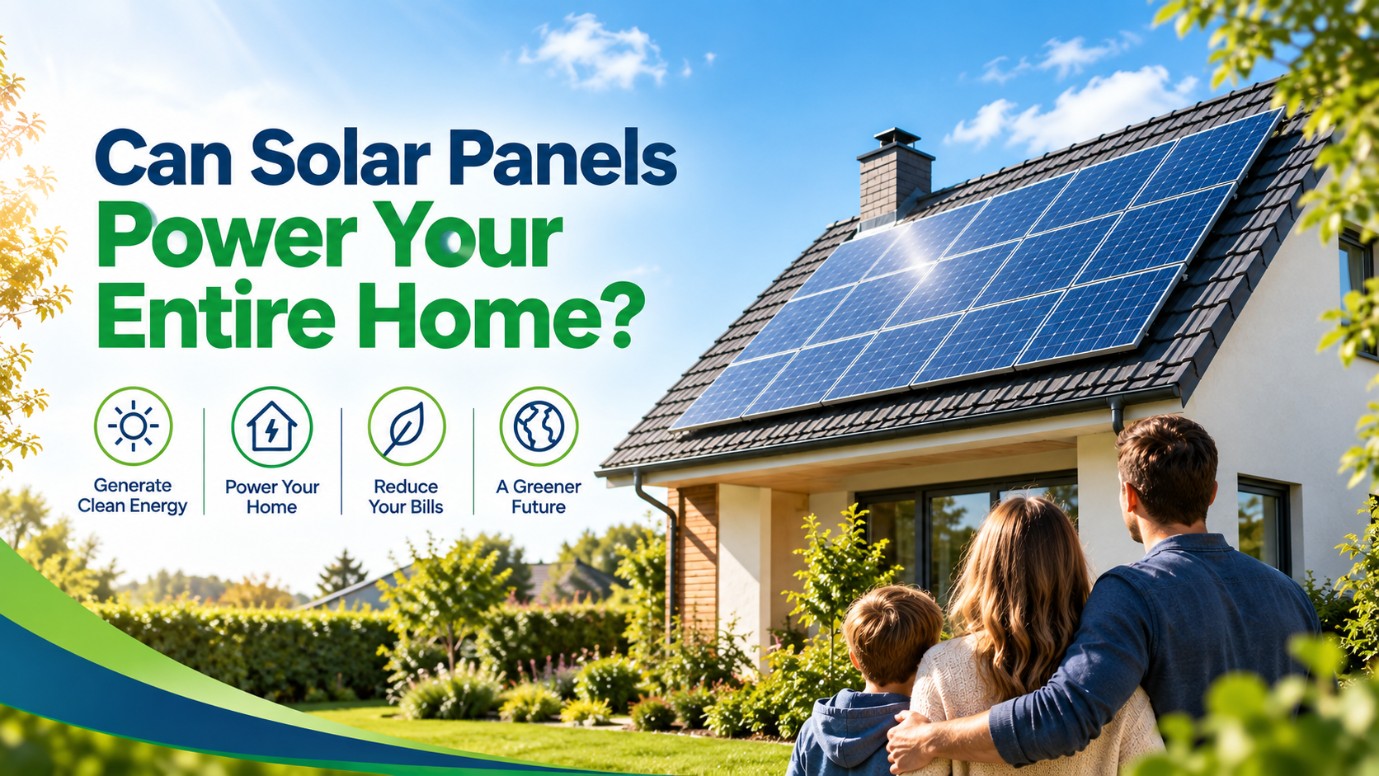
Solar panels can generate a significant amount of the electricity a household needs, but can they realistically power your entire home? For many London homeowners, solar panels can provide a large proportion of their electricity requirements. However, complete energy independence depends on electricity consumption, available roof space, system size, weather conditions and battery storage.
Solar PV does not produce the same amount of electricity every day. Generation changes with the seasons and weather, while household energy needs also vary.
How Do Solar Panels Power a Home?
Solar photovoltaic (PV) panels convert daylight into electricity that can power household appliances, lighting, and other electrical equipment.
When panels generate more electricity than your home is using, the surplus can be stored in a battery or exported to the grid, depending on your system. When your home needs more electricity than the panels are producing, additional electricity can be supplied by the grid.
A typical grid-connected solar PV system therefore does not need to meet your home's entire electricity demand at every moment.
Can Solar Panels Generate Enough Electricity for Your Home?
They can generate a substantial amount, but every property is different. Important factors include:
- Annual household electricity consumption
- Available roof space
- Roof orientation and pitch
- Shading from trees or nearby buildings
- Solar system size and efficiency
- Seasonal daylight
- Household electricity usage patterns
- Battery storage
Why Does Solar Generation Change Throughout the Year?
Solar panels do not produce the same amount of electricity every day. Spring and summer generally provide longer daylight hours and greater opportunities for solar generation. During autumn and winter, shorter days, and lower levels of sunlight usually reduce output.
Cloud cover can also affect daily performance. Solar panels continue working when the sky is cloudy, but reduced available light generally means less electricity is produced.
Your system may therefore generate more electricity than your home needs at certain times and less at others.
What Happens When Solar Panels Produce Too Much Electricity?
During a sunny day, your panels may generate more electricity than your household needs. Depending on your system, surplus electricity may be:
- Stored in a solar battery.
- Exported to the electricity grid.
- Used by other electrical equipment in your property.
Battery storage can allow you to use some solar electricity later, particularly during the evening when your panels are no longer generating power.
Can a Solar Battery Power Your Home at Night?
Solar panels generate electricity during daylight hours. A solar battery can store some electricity generated during the day for later use.
Can Solar Panels Work During Winter?
Yes. Solar panels can continue generating electricity during winter whenever sufficient daylight is available. However, winter generation is generally lower than summer generation because days are shorter and available sunlight is reduced.
A system may generate a significant amount of annual electricity while still requiring grid electricity during darker winter periods.
What About Cloudy and Rainy Days?
London homeowners do not need perfect sunshine for solar panels to work. Solar PV panels can generate electricity from available daylight, including diffused light on cloudy days.
However, heavy cloud cover generally reduces output compared with bright sunshine. Rain does not automatically stop solar panels from generating electricity.
Solar performance should therefore be assessed across the year rather than based on weather on one particular day.
Can Solar Panels Make You Completely Energy Independent?
For most grid-connected London homes, complete energy independence is more difficult than simply installing solar panels.
A property would need sufficient electricity generation, suitable battery storage, and appropriate infrastructure to manage periods when solar generation is low, particularly during winter.
However, complete independence is not necessary for solar panels to provide benefits. A well-designed system can reduce the amount of electricity your household needs to purchase from the grid.
How Can You Increase Solar Self-Consumption?
Making better use of your solar electricity can help maximise the value of your system. Where practical, consider using energy-intensive appliances during daylight hours when your panels are generating electricity.
Smart energy controls and battery storage may also help households use more of their solar generation.
Is Solar PV Suitable for Every Home?
Solar PV can be suitable for many London properties, but every home is different. A proper assessment should consider:
- Roof space
- Shading
- Household electricity consumption
- System requirements
- Expected energy generation
Properties with significant shading or limited roof space may require more careful planning. Careful planning can also help balance installation costs, expected generation, and future household energy needs, particularly if you are considering battery storage or an electric vehicle later.
Take Control of Your Home's Energy
So, can solar panels power your entire home? They can generate a significant proportion of a property's electricity requirements, but generation naturally changes with the weather, seasons, and time of day.
The best approach is to design a system around your property and energy consumption. With the right combination of solar PV, sensible energy use and battery storage where appropriate, you can make greater use of renewable electricity generated at home.
Ready to Explore Solar for Your Home?
If you are considering solar PV, Infinity can help you understand your energy requirements and explore whether solar could be a suitable solution for your home.
Get in touch with Infinity today to explore solar for your London home and take the next step towards generating renewable electricity at home.
Ready to improve your home's energy efficiency?
Check your eligibility for grants and book a free survey with our team.
Book Free Survey