
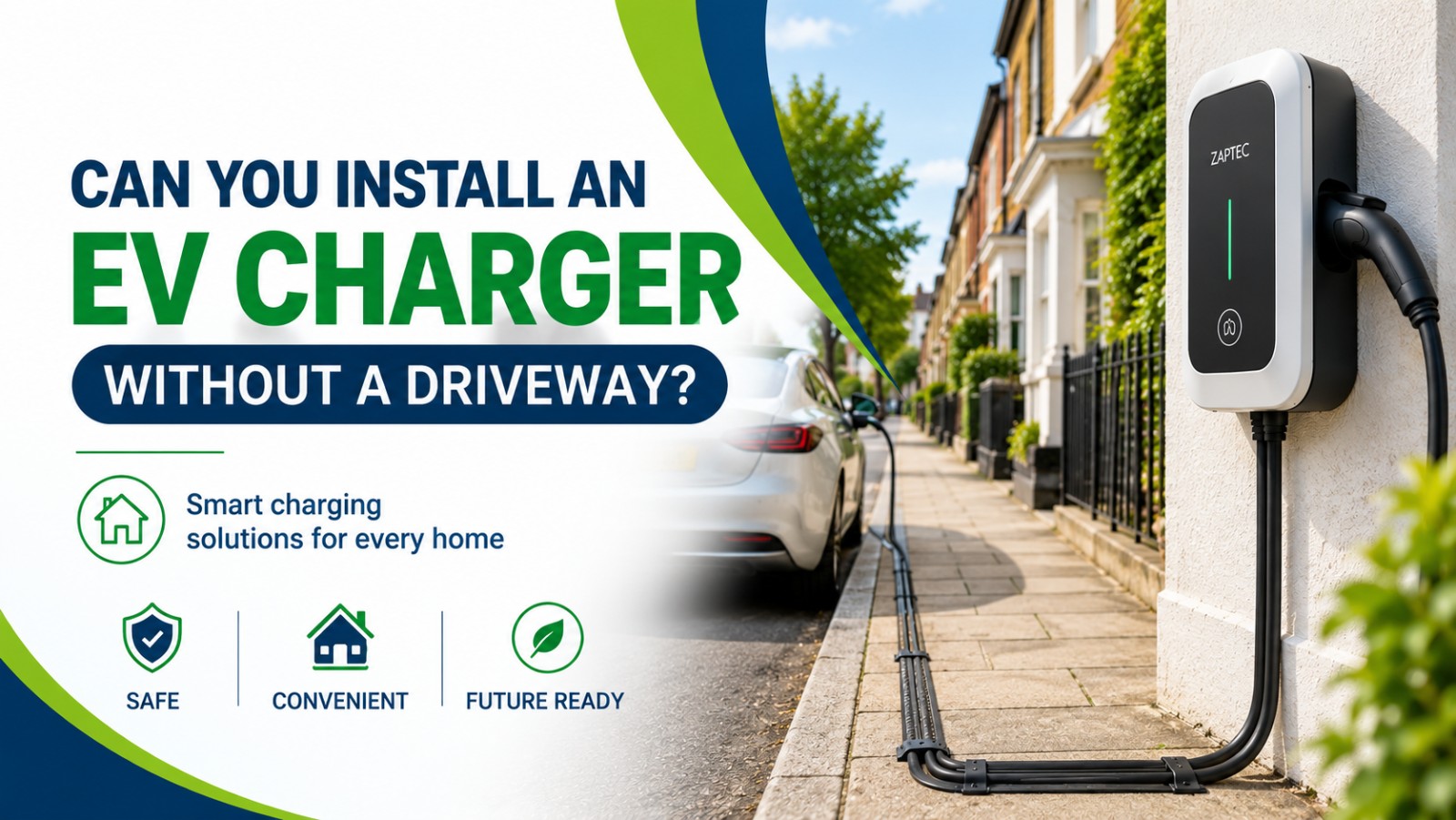
Owning an electric vehicle does not necessarily mean you need a private driveway or garage. Many London households live in terraced houses, flats, and other properties where parking is on the street.
So, can you install an EV charger without a driveway? Potentially, yes. However, installation can be more complicated when your vehicle is parked on a public road. You need to consider cable routing, pavement safety, permissions, electrical requirements, and local authority rules.
Government support is also available for eligible households with on-street parking. From 1 April 2026, the chargepoint grant can provide up to £500 towards an eligible installation, subject to scheme requirements.
How Does On-Street EV Charging Work?
Electricity still needs to travel safely from your home's electrical supply to your vehicle. The main difference is the route between the property and the parked car.
You cannot simply install a charger and leave a loose cable across the pavement. A cable across a public footway can create a trip hazard and obstruct pedestrians, wheelchair users, pushchairs, and other pavement users.
A suitable installation may involve:
- A wall-mounted EV chargepoint
- A suitable charging cable
- A cross-pavement channel or charging gully
- Appropriate electrical protection
- Safe cable routing
- Required permissions
- A suitable parking arrangement
What Is a Cross-Pavement Charging Solution?
A cross-pavement charging solution is designed to allow an EV charging cable to cross a pavement safely without lying loosely on the walking surface.
Government guidance on on-street parking support refers to cross-pavement solutions, including charging gullies. The appropriate solution depends on several factors, including pavement width and construction, pedestrian access, distance between the property and vehicle, cable length, drainage, existing utilities, street furniture, and local authority requirements.
This is why a professional site assessment is particularly important when there is no driveway.
Do You Need Permission?
Permission requirements can vary depending on the property and installation.
If you rent your home, you may need permission from your landlord or property owner. Flat owners may also need approval from a freeholder, property manager, or management company.
Local authority requirements may apply where the charging arrangement crosses public land or a pavement.
Before arranging installation, establish who owns the property where the charger will be installed, who manages the pavement, where the vehicle will normally be parked, whether a cross-pavement solution is permitted and whether local requirements affect the installation.
Getting these answers early can help prevent unnecessary delays.
What About Terraced Houses and Flats?
Terraced houses are a common example of properties where EV charging without a driveway may be needed. Whether installation is possible depends on the property layout, pavement width, parking availability, and cable distance.
Flats can present additional challenges because parking may be shared or located away from the building. Permission from a landlord, freeholder, or property manager may also be required.
A professional assessment can help establish whether an appropriate installation is possible and identify the most practical charging arrangement.
Is There an EV Charger Grant for Homes Without Driveways?
Yes. In 2026, Government support includes a chargepoint grant for eligible households with on-street parking.
The scheme is available to eligible households that own or rent their property and only have on-street parking. The installation must use a suitable cross-pavement solution, such as a charging gully.
The maximum grant is currently £500, subject to eligibility and scheme requirements. The scheme is scheduled to run until 31 March 2027, although Government rules can change.
Do not assume you can install the charger first and claim the grant afterwards. Check the latest eligibility requirements before arranging installation.
What About the Electrical Installation?
A driveway is not the only consideration. Your property's electrical system must also be suitable for EV charging.
An installer may need to assess the existing consumer unit, available electrical capacity, cable routing, earthing arrangements, protective devices, chargepoint location, cable length, and load management requirements.
A professional assessment helps ensure the installation is designed around your property and charging needs. It can also identify electrical limitations before equipment is purchased or installation work begins.
Can You Charge Overnight Without a Driveway?
Potentially, yes. If your installation provides a safe and permitted connection between the chargepoint and your parked vehicle, overnight charging may be possible.
A smart charger can make scheduled charging more convenient, particularly if your electricity tariff offers cheaper rates at certain times.
However, the vehicle must be parked appropriately, and the charging arrangement must not create an obstruction or safety risk. A suitable solution should allow pedestrians to use the pavement normally.
What If On-Street Charging Is Not Possible?
Not every property will be suitable for a private home charger. If a safe cross-pavement solution cannot be installed, alternatives include:
Public Charging Networks
Public chargepoints may be available on residential streets, at supermarkets, car parks, and other locations. These can provide convenient charging without requiring equipment at your property.
Workplace Charging
If your employer provides EV charging, workplace charging may reduce the amount of charging needed at home.
Destination Charging
Some hotels, leisure facilities, and businesses provide charging while customers use their services.
Local Authority Charging
Some councils are developing on-street charging infrastructure for residents without private parking. Availability varies between areas, so check your local council's plans and facilities.
What Should You Consider Before Installation?
Before purchasing equipment, consider where your vehicle will normally be parked, whether electricity can reach it safely, whether a suitable cross-pavement solution is available, whether you need permission, whether your electrical supply can support the charger, and whether you qualify for government support.
Planning these points in advance can make EV charger installation more straightforward.
Explore Your EV Charging Options with Infinity
Not having a driveway does not automatically prevent you from charging an EV at home. With the right assessment, equipment, permissions and installation approach, a suitable driveway-free charging solution may be possible.
Safety and accessibility should always come first. A charging cable should never create an unnecessary hazard for pedestrians or restrict access along the pavement.
If you are considering an EV charger without a driveway, Infinity can help you explore your options and understand what may be suitable for your property.
Get Started Today
Get in touch with Infinity today to discuss your EV charging requirements and find out whether a safe, practical charging solution could work for your London home.
Ready to improve your home's energy efficiency?
Check your eligibility for grants and book a free survey with our team.
Book Free Survey