
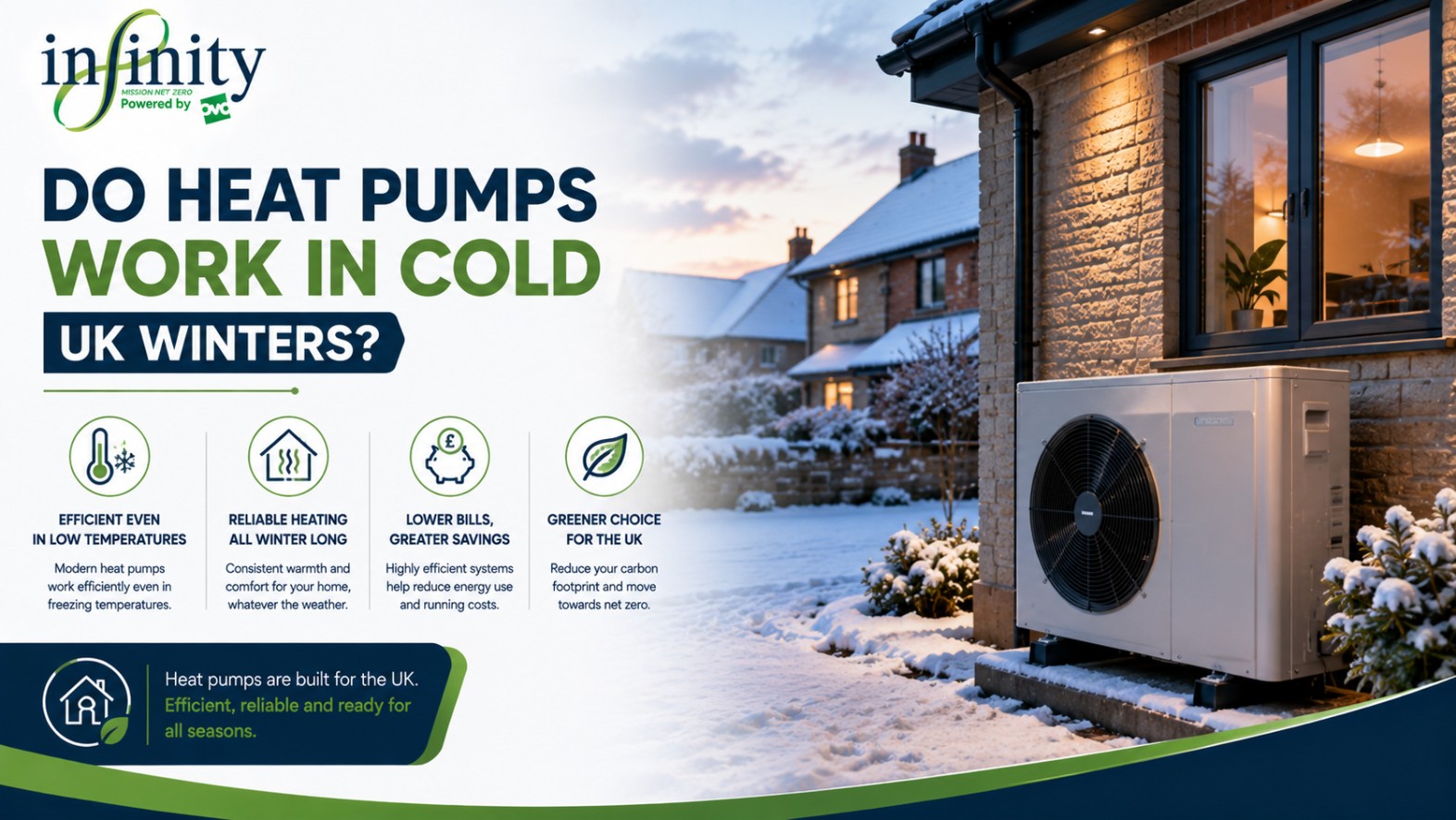
If you're considering a heat pump, you may wonder whether it can keep your home warm during a cold London winter. With temperatures often close to freezing, this concern is understandable.
The good news is that air source heat pumps are designed to operate in cold weather. They can extract heat from outdoor air even when temperatures fall below 0°C. However, efficiency decreases as temperatures fall, so correct design, sizing, insulation and controls are important.
Unlike traditional gas boilers, heat pumps do not burn fuel to create heat. They use electricity to move heat from the outdoor environment into your home.
Can Air Source Heat Pumps Work Below 0°C?
Yes. Modern air source heat pumps are designed for low outdoor temperatures. Energy Saving Trust guidance states that they can still extract heat at around -15°C, although efficiency decreases as temperatures fall.
The exact operating range depends on the model and system design, so homeowners should check manufacturer performance information before choosing a unit. In London, freezing temperatures are not a reason to rule out a heat pump.
What Happens to Efficiency in Cold Weather?
Efficiency is affected by outdoor temperature and heating flow temperature. As the difference between outside temperature and the required heating temperature increases, the system has to work harder.
Cold weather can mean higher electricity consumption, lower efficiency, reduced heat output from some systems and longer heating periods. This does not make heat pumps ineffective; it highlights the importance of designing the system for expected conditions.
Why Does Heat Pump Design Matter?
A heat pump should not simply be chosen according to the size of an existing boiler. It should be designed around the property's heat loss and heating demand.
A professional assessment considers property size, construction, insulation, windows, room sizes, heat loss, radiators or underfloor heating, local design temperatures and hot water requirements. Correct sizing is particularly important during cold weather.
Does Insulation Make a Difference?
Yes. Poor insulation increases heat loss and heating demand. Improving loft, wall and floor insulation, windows, doors, and draught-proofing can reduce the work required from the system.
This is beneficial because heat pumps operate at lower flow temperatures.
Do You Need New Radiators?
Not necessarily. Existing radiators should be assessed. Traditional boilers can provide very high water temperatures, while heat pumps generally work most efficiently at lower flow temperatures.
Some properties may benefit from larger or additional radiators, underfloor heating, improved insulation or better controls. However, existing radiators may already be suitable, particularly in well-insulated homes or with an appropriate high-temperature heat pump.
What Happens During Very Cold Weather?
During a cold spell, a heat pump may run for longer to maintain indoor temperature. This is normal. Weather compensation controls can adjust operation according to outdoor conditions, helping maintain comfort and efficiency.
What Is Defrosting?
In cold and damp weather, frost can form on the outdoor heat exchanger. A defrost cycle removes ice and maintains operation. This is normal, although persistent heavy icing or unusual performance should be checked by a professional.
Older London homes can also use heat pumps, but their heat loss, insulation, radiator capacity, flow temperature, and available outdoor space should be assessed before selecting a system.
Are Heat Pumps More Efficient Than Gas Boilers?
Heat pumps can remain highly efficient because they transfer existing heat rather than generating all heat from fuel. Energy Saving Trust explains that a heat pump can produce around 2.5 to 4 units of heat for every unit of electricity used, depending on operating conditions.
Actual efficiency varies with outdoor temperature, flow temperature, and system design, so overall seasonal performance is more useful than one fixed efficiency figure.
How Can You Improve Winter Performance?
Improve insulation, maintain a steady indoor temperature, use weather compensation, keep the outdoor unit clear, maintain the system, use suitably sized heat emitters, and choose professional installation and commissioning.
When Might a Heat Pump Not Be Right?
Challenges include very high heat loss, poor insulation, limited outdoor space, inadequate heat emitters or unusually high heating temperatures. A professional survey is important before deciding.
Why Professional Installation Matters
Performance depends heavily on system design and installation. A professional installer can assess heat loss, capacity, radiators, insulation, hot water requirements, controls, positioning, and electrical needs.
Proper commissioning ensures the system matches the property's requirements and supports reliable, efficient performance.
How Infinity Helps London Homeowners
At Infinity, we understand that every property has different heating requirements. Our approach considers the building, existing heating system, insulation, and homeowner needs before recommending a suitable solution.
Professional assessment can help ensure reliable heating for both modern and older London homes.
Conclusion
Heat pumps do work in cold London winters and can continue providing heating below freezing. Efficiency decreases as temperatures become colder, but this is a normal part of operation rather than evidence that the technology cannot cope with winter.
Correct sizing, suitable radiators, insulation, appropriate controls, and professional installation are key. With the right design and installation, a heat pump can provide reliable, efficient heating throughout a typical London winter while supporting a lower-carbon approach to home heating.
If you are considering an air source heat pump, Infinity can help you explore your options and find a heating solution suited to your property's requirements.
Ready to improve your home's energy efficiency?
Check your eligibility for grants and book a free survey with our team.
Book Free Survey