
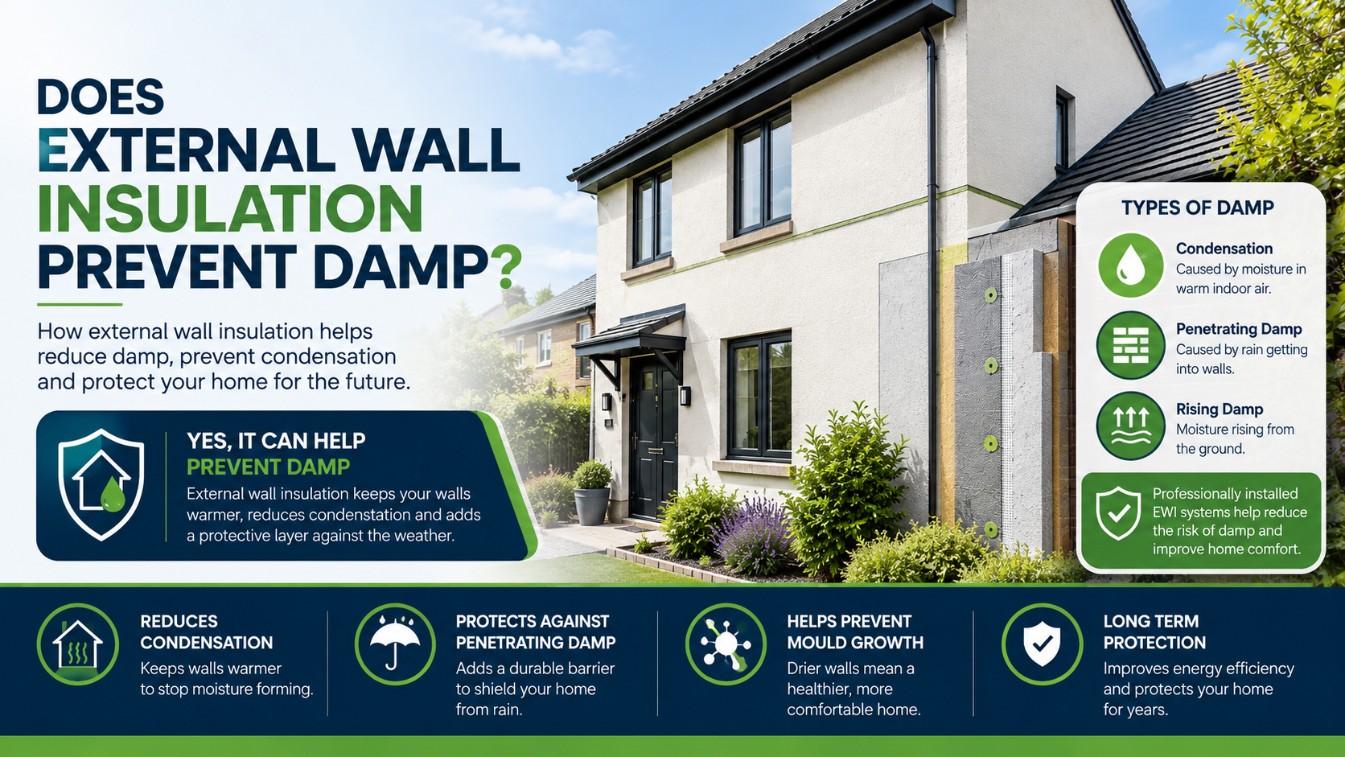
Damp is one of the most common problems affecting homes across the London. It can cause peeling paint, mould growth, unpleasant odours, and even structural damage if left untreated. Many homeowners considering external wall insulation often ask whether it can solve damp issues or prevent them from developing in the future.
The answer is that external wall insulation can help reduce certain types of damp by improving the thermal performance of your home and reducing condensation. However, it is not a cure for every type of damp. The effectiveness depends on the underlying cause of the moisture problem.
This guide explains how external wall insulation affects damp, which types of damp it can help prevent, and when additional repairs may be needed before installation.
What Causes Damp in London Homes?
Before understanding how insulation helps, it is important to know why damp occurs.
The most common types of damp found in London properties include:
- Condensation
- Penetrating damp
- Rising damp
Each type has a different cause and requires a different solution.
Condensation
Condensation is the most common form of damp in London homes. It occurs when warm, moisture-rich air comes into contact with cold walls or windows, causing water droplets to form.
Condensation is particularly common in:
- Bathrooms
- Kitchens
- Bedrooms
- Poorly ventilated properties
If condensation is not controlled, it can eventually lead to mould growth.
Penetrating Damp
Penetrating damp occurs when water enters the building from outside due to problems such as:
- Cracked brickwork
- Damaged render
- Faulty gutters
- Roof leaks
- Defective pointing
Unlike condensation, penetrating damp usually affects specific sections of a wall.
Rising Damp
Rising damp happens when groundwater travels upwards through walls because of a damaged or ineffective damp-proof course.
Although less common than condensation, rising damp requires specialist treatment before any insulation work is carried out.
How Does External Wall Insulation Help?
External wall insulation works by fixing insulation boards to the outside of your property before covering them with a weather-resistant render or cladding system.
This creates a continuous thermal barrier around the building.
As a result, the external walls remain warmer throughout the year, making it much harder for condensation to develop inside the property.
Can External Wall Insulation Prevent Condensation?
Yes, in many cases it can.
Condensation forms because internal walls become cold during winter.
When insulation keeps the walls warmer, the temperature difference between the wall surface and indoor air becomes much smaller.
This helps reduce:
- Surface condensation
- Cold spots
- Black mould growth
- Moisture build-up
Homes with solid walls often notice a significant improvement in indoor comfort after installation.
Can External Wall Insulation Stop Penetrating Damp?
External wall insulation can help reduce the risk of penetrating damp because the protective render or cladding provides an additional weather-resistant layer.
Benefits include:
- Improved protection from driving rain
- Reduced water penetration
- Better resistance to harsh weather
- Protection for existing brickwork
However, damaged walls must always be repaired before insulation is installed.
Applying insulation over existing defects will not solve structural moisture problems.
Can It Cure Rising Damp?
No.
External wall insulation does not stop rising damp.
If moisture is travelling upwards from the ground through masonry, the source of the problem must be repaired first.
Common treatments include:
- Repairing or replacing the damp-proof course
- Improving drainage
- Treating damaged plaster
- Removing contaminated materials
Once the property is dry and stable, insulation can then be considered.
Why Proper Installation Is Essential
Professional installation is extremely important.
Poorly installed insulation may create moisture problems instead of preventing them.
Experienced installers will always assess:
- Existing damp issues
- Wall condition
- Ventilation
- Drainage
- Building construction
- Moisture levels
Only suitable properties should receive external wall insulation.
Additional Benefits Beyond Damp Prevention
External wall insulation offers many long-term advantages.
Improved Energy Efficiency
Heat loss through solid walls is significantly reduced, helping your heating system work more efficiently.
Lower Energy Bills
A warmer home usually requires less energy to maintain comfortable temperatures throughout winter.
Better Indoor Comfort
Rooms stay warmer, and cold walls become much less noticeable.
Reduced Carbon Emissions
Lower energy consumption means your home produces fewer carbon emissions.
Enhanced Property Appearance
Modern render finishes can completely refresh the outside of older properties.
Improved EPC Rating
Better insulation often contributes towards a higher Energy Performance Certificate (EPC) rating.
Does Every Property Benefit?
External wall insulation is particularly suitable for:
- Solid-wall homes
- Victorian properties
- Edwardian houses
- Detached homes
- Semi-detached properties
- Terraced houses
Homes built before cavity wall insulation became common often see the greatest improvements.
A professional property survey is always recommended before deciding whether external wall insulation is suitable.
Signs Your Home May Benefit
You may benefit from external wall insulation if you notice:
- Cold external walls
- High heating bills
- Condensation on walls
- Black mould around windows
- Uneven room temperatures
- Poor EPC rating
- Solid brick walls
These signs often indicate poor thermal performance rather than structural damp.
Common Misconceptions
Several myths surround external wall insulation.
Myth: It fixes every damp problem.
Fact: It helps reduce condensation but does not cure rising damp or structural water ingress.
Myth: Insulation traps moisture inside walls.
Fact: Modern insulation systems are designed to manage moisture correctly when professionally installed.
Myth: Homes cannot breathe after insulation.
Fact: Proper ventilation remains important, and professional systems are designed to maintain healthy moisture balance.
Why Professional Assessment Matters
Every property is different.
Before recommending external wall insulation, experienced installers assess:
- Wall construction
- Existing insulation
- Damp issues
- Ventilation
- Structural condition
- Energy performance
This ensures the correct solution is installed for your property.
Why Choose Infinity?
Infinity provides professional external wall insulation services for homeowners across London. Our experienced team carries out detailed property surveys to identify heat loss, assess wall conditions, and recommend the most suitable insulation solution.
We focus on improving energy efficiency, reducing condensation, and helping homeowners create warmer, healthier, and more comfortable living environments through high-quality installation and expert workmanship.
Get a Free Quote Today
If you are considering external wall insulation for your property, Infinity is here to help.
Our experienced team will assess your home, identify any existing moisture issues, and recommend the most suitable insulation solution based on your property's construction and energy efficiency needs.
Contact Infinity today to arrange your free consultation and discover how professional external wall insulation can help reduce heat loss, improve comfort, and protect your home for years to come.
Ready to improve your home's energy efficiency?
Check your eligibility for grants and book a free survey with our team.
Book Free Survey