
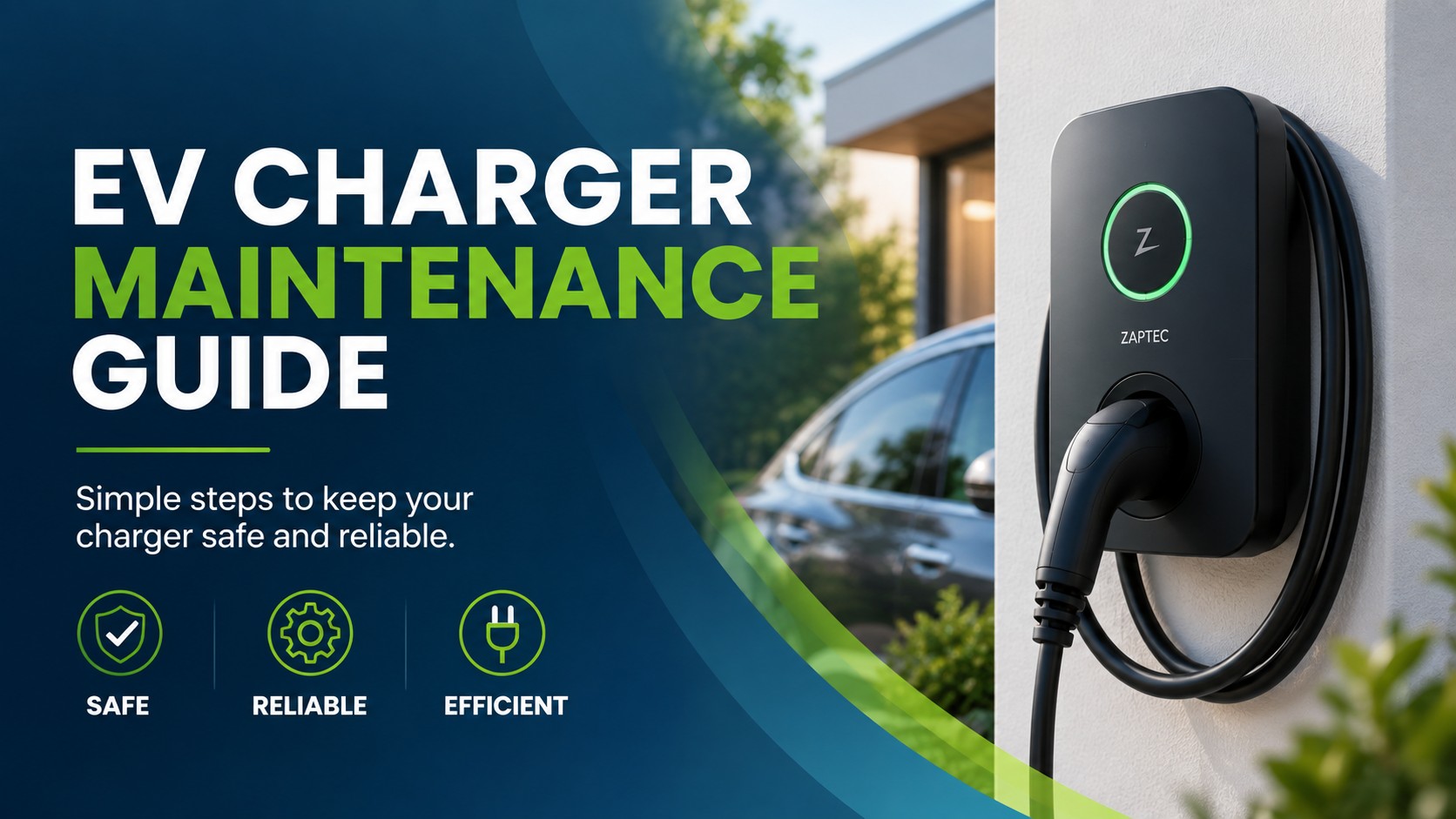
Electric vehicles are becoming an increasingly practical choice for everyday travel, and having a dedicated charging point at home or work makes ownership more convenient. Like any electrical equipment, an EV charging point should be maintained properly to help keep it safe, reliable, and ready to use.
This EV charger maintenance guide explains what you can safely check yourself, when professional servicing may be required, and which warning signs should never be ignored.
Why Is EV Charger Maintenance Important?
An EV charger can deliver significant electrical power for extended periods. Keeping it in good condition can help you:
- Identify visible damage early
- Reduce avoidable charging problems
- Protect cables and connectors from unnecessary wear
- Maintain a safer charging environment
Maintenance does not mean carrying out complex electrical work. For most users, it means regularly checking the equipment and responding appropriately when something changes.
Regular checks are especially useful for frequently used workplace chargers, shared charging points, and installations exposed to traffic. Early attention can help prevent avoidable disruption and support charging for drivers throughout the week.
How Often Should an EV Charger Be Maintained?
There is no single maintenance schedule for every EV charging point. Requirements can depend on the charger, installation, environment, frequency of use, and manufacturer's instructions.
Professional EV charger servicing may be appropriate if the charger develops recurring faults, shows physical damage, experiences repeated interruptions, or has been exposed to unusual conditions.
Simple EV Charger Checks You Can Carry Out
Inspect the Charging Cable
Before use, check the cable for obvious damage, including cuts, splitting, exposed wiring, severe kinks or crushed sections.
Avoid using a damaged charging cable. Store it carefully to prevent unnecessary bending or twisting. Never drive over the cable or leave it where it could become a trip hazard.
Check the Connector
Inspect the vehicle connector and charger connection for visible damage, contamination, or unusual wear.
If you notice looseness, scorching, melting, unusual discolouration or physical damage, stop using the equipment and seek professional advice. Never attempt to repair or modify the connector yourself.
Keep the Charger Clean
Keep the external casing clean using the method recommended by the manufacturer. Avoid spraying water or cleaning products directly into sockets, openings, or electrical components.
Look Out for Warning Signs
Some problems require more than routine cleaning or visual checks. Warning signs include:
- The charger repeatedly stops during charging
- Charging takes noticeably longer than expected
- Persistent fault messages appear
- The connector becomes unusually hot
- You notice burning smells
- There are signs of melting or scorching
- Circuit protection repeatedly trips
- The charger makes unusual noises
- The casing is cracked or damaged
- The equipment has suffered impact or water ingress
What Should You Avoid Doing?
Good EV charger safety also means knowing what not to do.
Do not open the charger casing, alter electrical connections or attempt internal repairs unless you are appropriately qualified and authorised.
Avoid using damaged cables, makeshift extensions, or unsuitable accessories simply to continue charging. If the charger has an electrical fault, repeated protective-device trips, or visible damage, stop using it and arrange a professional inspection.
EV Charger Maintenance for Outdoor Installations
Outdoor charging points are exposed to rain, sunlight, temperature changes, dirt, and accidental impact. Properly installed equipment is designed for its intended environment, but it should still be monitored.
Avoid leaving the charging cable where it can be driven over or damaged. Good cable management can reduce unnecessary wear and improve everyday safety.
Does an EV Charger Need Professional Servicing?
Professional EV charging point servicing may be appropriate when:
- The charger develops recurring faults
- Electrical protection repeatedly trips
- The equipment has been physically damaged
- Charging performance changes significantly
- There are signs of overheating
- The installation has been altered
- You experience unexplained charging interruptions
How to Make Your EV Charger Last Longer
Follow the manufacturer's instructions for charging, cable handling, cleaning, and storage. Avoid unauthorised modifications.
Protect the cable by storing it neatly and avoiding unnecessary dragging or pressure.
Respond to faults promptly rather than waiting for a minor issue to become a complete charging failure.
EV Charger Safety Should Always Come First
An EV charger is part of an electrical installation and should be treated accordingly.
If you smell burning, see smoke, notice melting, or experience another immediate electrical safety concern, stop using the charger and take appropriate safety precautions. Do not attempt to investigate internal electrical components yourself.
Practical EV Charger Maintenance Checklist
- Check the cable for visible damage
- Inspect the connector before use
- Keep the charger and surrounding area clean
- Keep the cable away from vehicles and trip hazards
- Watch for unusual heat, smells, noises or discolouration
- Pay attention to repeated charging faults
- Follow the manufacturer's instructions
- Avoid unauthorised electrical repairs
- Arrange professional assistance when a technical fault is suspected
Get Professional Help With Your EV Charging Point
A reliable charging point can make electric vehicle ownership easier. Regular visual checks, appropriate cable handling, and prompt action when something appears unusual can contribute to safer, more dependable charging.
If you are experiencing problems with an existing charging point or need professional advice about an EV charging installation, Infinity can help you take the next appropriate step.
Get a Free Quote Today
Looking for professional support with your EV charging requirements? Contact Infinity today to discuss your requirements and get a free quote.
Ready to improve your home's energy efficiency?
Check your eligibility for grants and book a free survey with our team.
Book Free Survey