
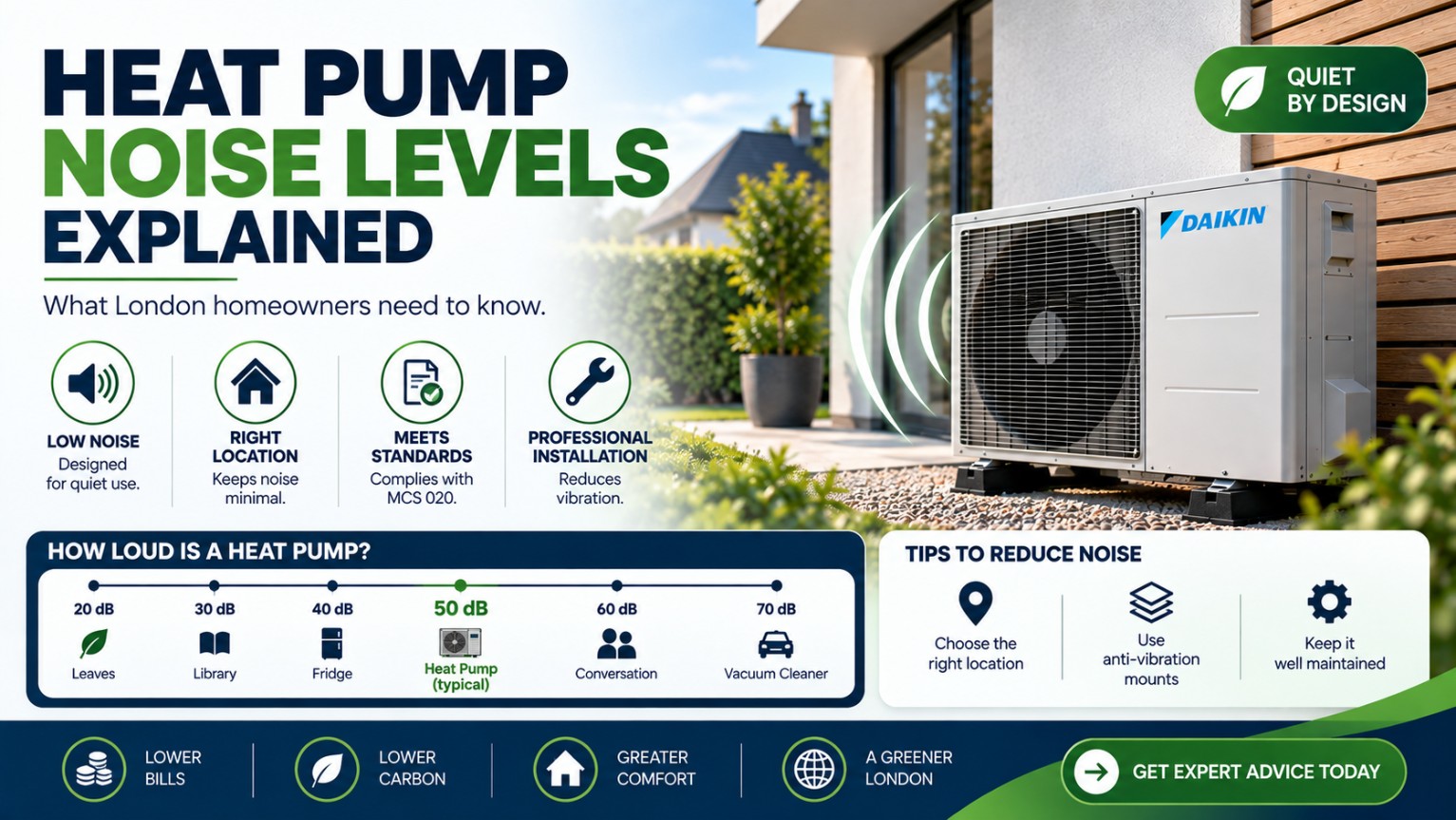
For London homeowners considering renewable heating, heat pump noise is a common concern. Modern air source heat pumps (ASHPs) are designed to operate quietly, but like any mechanical system, they produce some sound.
So, how noisy are air source heat pumps? It depends on the model, installation, operating conditions, and distance from the outdoor unit. With the right system and professional installation, noise can usually be kept to a comfortable level.
What Causes Air Source Heat Pump Noise?
An air source heat pump uses a fan, compressor, and refrigeration system to extract heat from outdoor air. These components create most of the sound.
The fan and compressor create most of the sound, with the operating noise changing during start-up, shut-down or defrost cycles.
Noise varies between models, so checking the manufacturer's published sound data is important.
How Are Heat Pump Noise Levels Measured?
Heat pump noise is generally measured in decibels (dB), with dB(A) commonly used because it reflects how people perceive different sound frequencies.
Sound power describes the appliance's output, while sound pressure describes noise at a specific location. Distance and surrounding surfaces affect perceived noise.
Are Air Source Heat Pumps Noisy?
Modern air source heat pumps are not usually considered excessively noisy. However, the outdoor unit will be audible when operating, particularly when you are close to it.
Walls and other hard surfaces may reflect sound, while poor mounting can increase vibration. In London, careful planning matters where outdoor space is limited.
UK Noise and Planning Requirements
Heat pump installations in England may need to meet planning and permitted development requirements, including applicable noise limits. Under relevant permitted development conditions, MCS 020a includes a calculated sound pressure level limit of no more than 37 dB(A) at relevant assessment positions, subject to the applicable requirements.
Rules can vary according to the property and installation, so homeowners should check the requirements that apply to their location.
Where Should a Heat Pump Be Installed?
The position of the outdoor unit can have a major impact on perceived noise.
Where possible, avoid placing it directly outside bedroom windows. It needs enough clearance for airflow and servicing, with neighbouring properties and windows considered.
For terraced homes, positioning is especially important because properties are close together. Flats may require additional permissions, including approval from a freeholder or building management.
Does a Heat Pump Make More Noise in Winter?
Heat pumps may operate for longer during colder weather because the property needs more heat, making the system more noticeable.
During a defrost cycle, the system may temporarily change its operating sound as it removes ice from the outdoor heat exchanger. This is normal and does not necessarily indicate a fault.
Good insulation can reduce heat demand, helping the heat pump operate efficiently.
How Can You Reduce Heat Pump Noise?
Several measures can help minimise noise:
- Choose a model with good published noise performance.
- Position the unit away from bedrooms and neighbouring windows.
- Maintain adequate airflow around the outdoor unit.
- Use suitable mounting and anti-vibration measures where required.
- Keep the system properly maintained.
- Ensure the heat pump is correctly sized.
Simply adding barriers around a heat pump is not always suitable, as they can restrict airflow and affect performance. Acoustic measures should not obstruct the unit.
What If Your Heat Pump Is Suddenly Very Noisy?
A noticeable increase in noise should not be ignored. Rattling, grinding, buzzing, excessive vibration, or an unusually loud fan can indicate an issue.
Leaves, debris or ice can affect airflow, while worn components or loose fixings can create additional noise. If unusual sounds continue, a qualified engineer should inspect the system.
Can Heat Pumps Work in Terraced Houses and Flats?
Yes, but these properties require careful planning. For terraced homes, the installer should consider neighbouring windows, walls and outdoor spaces.
For flats, shared structures, limited outdoor space and permissions can make installation more complex. Noise and vibration should be considered during the design stage.
Why Professional Installation Matters
Heat pump noise depends on more than the appliance itself. A professional assessment should consider heat loss, system capacity, outdoor unit position, noise performance, airflow, mounting, and planning requirements.
Correct sizing and installation support efficient operation and help prevent unnecessary noise.
FAQs
Are air source heat pumps noisy?
Modern systems are designed to operate quietly, but the outdoor unit produces some sound while running.
How loud is an air source heat pump?
Noise varies by model and operating conditions. Check the manufacturer's published sound data before choosing a system.
Can I install a heat pump near a bedroom window?
It may be possible, but another location may be preferable. Noise, airflow, and applicable requirements should be assessed first.
Do heat pumps disturb neighbours?
A correctly selected and professionally installed system should keep noise to a reasonable level, although property layout and positioning matter.
Final Thoughts
Understanding heat pump noise levels is an important part of choosing an air source heat pump for a London home. Careful product selection, positioning, installation, and maintenance can minimise the impact.
Infinity can help homeowners assess suitable air source heat pump options and plan installations around the property, efficiency and practical requirements. Contact us for professional advice or a free quote.
Ready to improve your home's energy efficiency?
Check your eligibility for grants and book a free survey with our team.
Book Free Survey