
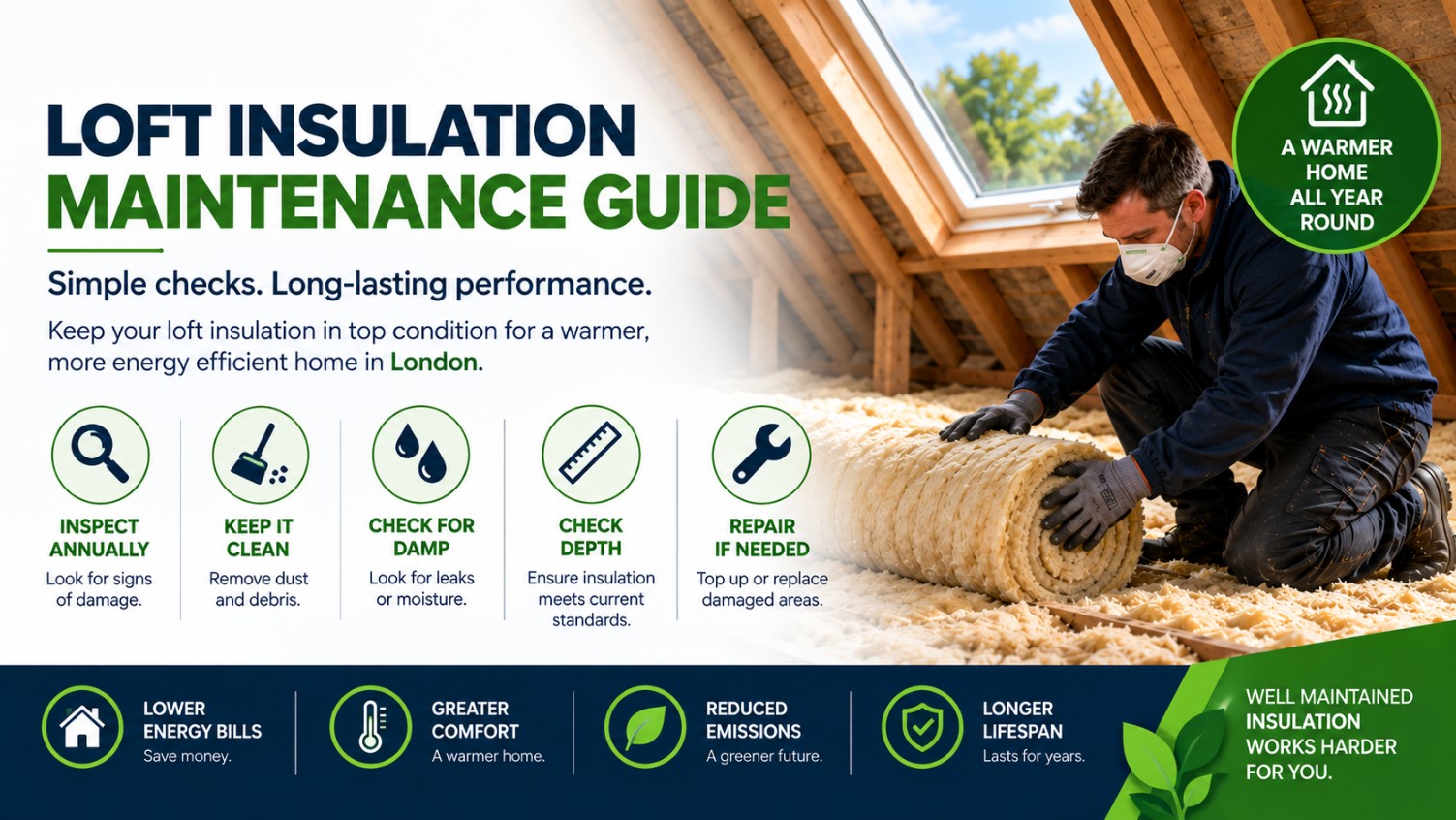
Loft insulation is an effective way to improve your home's energy efficiency, reduce heating bills, and maintain comfortable indoor temperatures. However, regular checks are important to ensure it continues to perform properly.
Although quality insulation can last for decades, moisture, pests, poor ventilation, and accidental damage can reduce its effectiveness. This loft insulation maintenance guide explains what to check, common problems to avoid, and when replacement may be necessary.
Why Loft Insulation Maintenance Matters
Loft insulation helps reduce heat loss through the roof, keeping your home warmer in winter and cooler in summer. Well-maintained insulation can provide:
- Lower energy bills
- Improved indoor comfort
- Reduced heat loss
- Better Energy Performance Certificate (EPC) ratings
- Lower carbon emissions
- Reduced risk of condensation and damp
How Often Should You Check Loft Insulation?
A visual inspection should be carried out at least once a year. You should also check your insulation after:
- Heavy rainfall or storms
- Roof repairs
- Pest infestations
- Plumbing leaks
- Electrical or ventilation work
Regular checks can help identify problems before they become expensive to repair.
What to Look for During an Inspection
Look carefully for signs that your insulation may be damaged or performing poorly, including:
- Wet or damp insulation
- Compressed insulation
- Gaps between rolls
- Mould growth
- Rodent or bird activity
- Torn or damaged materials
- Excessive dust and debris
- Uneven or displaced insulation
If you notice these issues, further assessment may be required.
Keep Your Loft Dry
Moisture is one of the biggest threats to insulation. Wet insulation loses its ability to trap heat and may encourage mould growth.
To keep your loft dry:
- Repair roof leaks quickly.
- Check roof tiles regularly.
- Inspect flashing around chimneys and roof windows.
- Keep gutters and downpipes working properly.
- Repair plumbing leaks promptly.
Preventing water damage can help extend the lifespan of your insulation.
Maintain Good Loft Ventilation
Proper ventilation helps control moisture and reduce condensation. Without sufficient airflow, moisture can become trapped in the roof space, increasing the risk of damp and mould.
Good ventilation helps:
- Remove excess moisture
- Protect roof timbers
- Reduce condensation
- Support insulation performance
Avoid blocking roof vents or air gaps during maintenance work.
Avoid Compressing the Insulation
Loft insulation works best when it remains light and evenly distributed. Storing heavy boxes directly on it or walking across it can compress the material and reduce its effectiveness.
If your loft is used for storage, consider installing raised loft boarding above the insulation instead of placing boards directly on it.
Watch for Pest Activity
Rodents, birds, and insects can damage insulation by nesting inside it or pulling it apart. Look for:
- Droppings
- Nesting materials
- Chewed insulation
- Unusual smells
- Scratching noises
Pests should be dealt with before damaged insulation is replaced.
Keep Insulation Evenly Distributed
Insulation should provide continuous coverage across the loft floor. Electrical work, plumbing repairs, or storage can cause it to move or leave exposed areas.
Check that your insulation is:
- Evenly spread
- Free from large gaps
- Properly positioned around joists
- Free from significant damage
Maintaining continuous coverage helps minimise unnecessary heat loss.
Inspect the Loft Hatch
The loft hatch can also contribute to heat loss if it is poorly sealed or uninsulated. Check that:
- The hatch closes securely.
- Draught seals are intact.
- Insulation is fitted where appropriate.
- Hinges and catches work properly.
A well-sealed hatch helps improve the overall effectiveness of your loft insulation.
Check Pipes and Water Tanks
Pipes and water tanks located in the loft should also be checked during maintenance.
- Ensure pipe insulation remains secure.
- Replace damaged pipe lagging.
- Check that cold water tanks are properly insulated.
- Ensure insulation is fitted appropriately around tanks to help protect against freezing.
When Should You Replace Loft Insulation?
While insulation can last for many years, replacement may be appropriate if it is:
- Water damaged
- Severely compressed
- Contaminated with mould
- Damaged by pests
- Several decades old and no longer performing effectively
- Significantly disturbed during renovation work
Replacing ineffective insulation can improve thermal performance and help reduce energy costs.
Common Loft Insulation Maintenance Mistakes
Avoid these common mistakes:
- Blocking roof ventilation
- Storing heavy items directly on insulation
- Ignoring roof leaks
- Leaving gaps after maintenance work
- Failing to inspect insulation regularly
- Delaying pest-related repairs
- Assuming old insulation will always remain effective
Benefits of Regular Loft Insulation Maintenance
Maintaining your insulation can provide:
- Lower energy bills
- Better indoor comfort
- Improved energy efficiency
- Reduced heat loss
- Longer insulation lifespan
- Lower risk of damp and mould
- Improved EPC ratings
- Reduced carbon emissions
How Infinity Helps
At Infinity, we understand that effective loft insulation requires more than installation. Our experienced team can assess existing insulation, identify signs of damage or poor performance, and recommend suitable solutions.
Whether you need additional insulation, replacement materials, or advice on improving your home's energy efficiency, we provide tailored solutions designed to support long-term comfort and savings.
Conclusion
Regular maintenance helps ensure your loft insulation continues to deliver energy-saving benefits. Annual inspections, prompt repairs, proper ventilation, and careful use of your loft can extend insulation performance while helping reduce heating costs.
If you're unsure about the condition of your insulation, a professional assessment can identify potential problems and help improve your home's energy efficiency for years to come.
Ready to improve your home's energy efficiency?
Check your eligibility for grants and book a free survey with our team.
Book Free Survey