
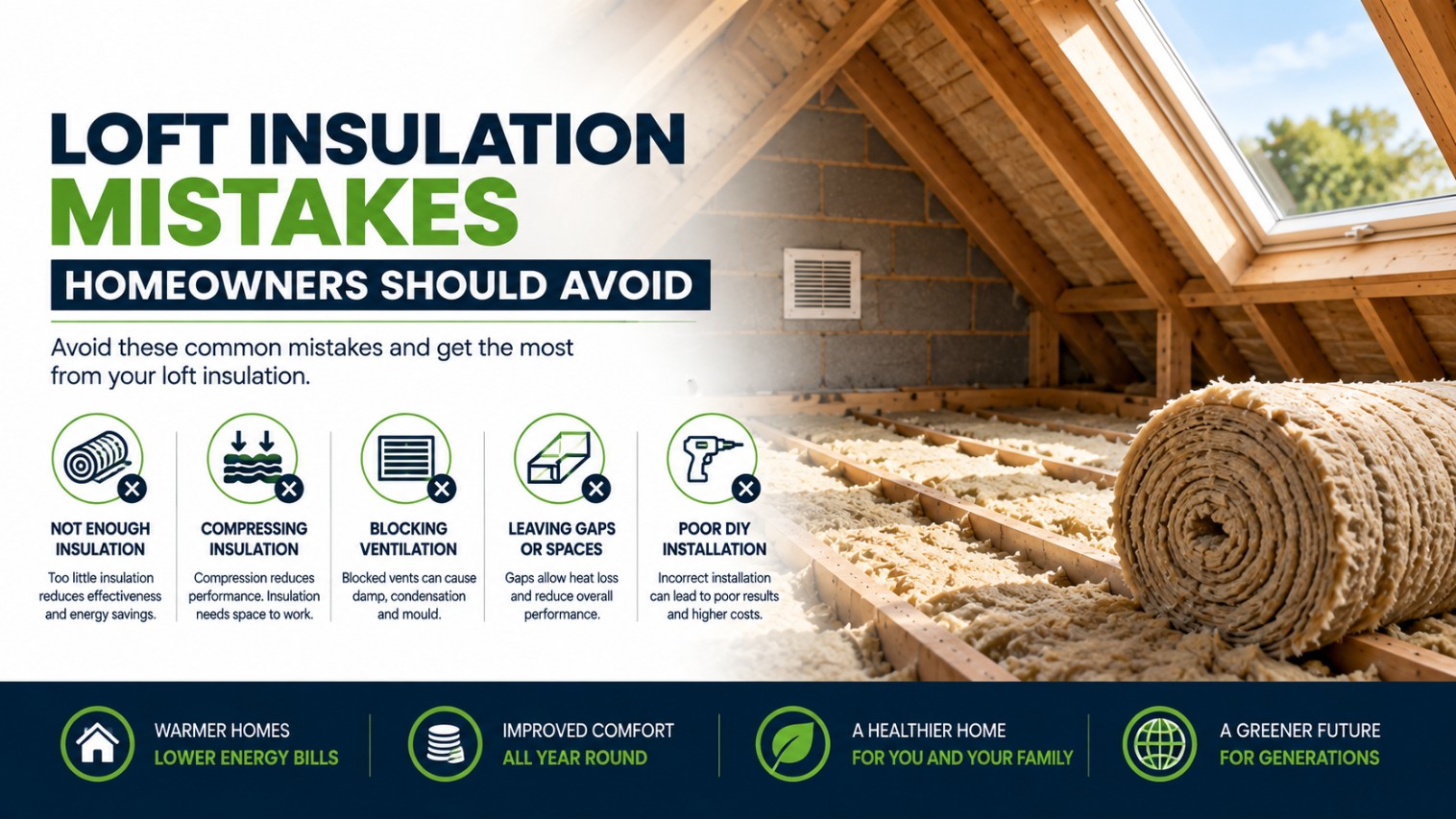
Loft insulation is one of the most effective ways to improve your home's energy efficiency, reduce heating bills, and create a comfortable living environment. However, poor planning, incorrect installation, or unsuitable materials can reduce its effectiveness and cause problems such as damp, condensation, and unnecessary heat loss.
In this guide, we'll explore common loft insulation mistakes homeowners make and explain how to avoid them.
Why Proper Loft Insulation Matters
A significant amount of heat can escape through an uninsulated or poorly insulated roof. Effective loft insulation helps retain warmth during winter, keep your home cooler during summer, and reduce the energy needed for heating.
When installed correctly, it can also:
- Lower household energy bills
- Improve indoor comfort
- Reduce heat loss
- Support better Energy Performance Certificate (EPC) ratings
- Reduce carbon emissions
Mistake 1: Installing Too Little Insulation
Older homes may have insulation installed when recommended insulation levels were lower than today's standards. Thin or outdated insulation allows more heat to escape, making your heating system work harder.
If your insulation is insufficient, upgrading it can improve your home's thermal efficiency and reduce energy loss.
Mistake 2: Compressing the Insulation
Loft insulation works by trapping pockets of air that slow down heat transfer. Walking directly on insulation or storing heavy boxes on top can compress these air pockets and reduce performance.
If you need loft storage, consider raised loft boarding that sits above the insulation.
Mistake 3: Blocking Loft Ventilation
Good ventilation is essential alongside insulation. Covering roof vents or blocking airflow can trap moisture inside the loft, increasing the risk of condensation, damp, and mould.
Always ensure adequate airflow is maintained when installing or upgrading insulation.
Mistake 4: Ignoring Damp or Roof Leaks
Installing insulation without addressing existing moisture problems can lead to further damage. Water from roof leaks or damaged flashing can make insulation wet and reduce its thermal performance.
Always identify and repair leaks or damp problems before installing new insulation.
Mistake 5: Choosing the Wrong Insulation Material
Different insulation materials suit different properties and loft spaces. Common options include:
- Mineral wool
- Fibreglass
- Sheep's wool
- Rigid insulation boards
- Recycled insulation materials
The right choice depends on your property's construction, loft layout, and energy-efficiency requirements. Professional advice can help you select a suitable material.
Mistake 6: Leaving Gaps in the Insulation
Even small gaps can reduce the effectiveness of loft insulation. Heat will escape through areas with poor coverage, reducing overall thermal performance.
Insulation should be installed evenly across the loft floor, with continuous coverage wherever appropriate.
Mistake 7: Covering Electrical Cables Incorrectly
Electrical cables require careful consideration during insulation work. Some may need to remain accessible or require specific precautions to prevent overheating.
Professional installers can work safely around electrical systems while ensuring insulation is installed correctly.
Mistake 8: Forgetting to Insulate the Loft Hatch
The loft hatch is often overlooked. An uninsulated or poorly sealed hatch can allow warm air to escape and reduce the overall effectiveness of your insulation.
Adding insulation to the hatch and fitting a suitable draught seal can help minimise heat loss.
Mistake 9: Not Replacing Old or Damaged Insulation
Although insulation can last for many years, it may eventually become:
- Compressed
- Damp
- Torn
- Contaminated by pests
- Less effective with age
Replacing damaged or outdated insulation can restore thermal performance and improve indoor comfort.
Mistake 10: Attempting Complex Installation Without Professional Advice
Simple insulation work may be suitable for some homeowners, but larger or more complex projects can benefit from professional guidance.
Incorrect installation can create ventilation problems, leave gaps, or result in inadequate insulation depth. Professionals can ensure the insulation is installed correctly while maintaining ventilation and protecting other parts of the loft.
How to Get the Best Results from Loft Insulation
To maximise the benefits of loft insulation:
- Choose suitable insulation for your property.
- Install it evenly and correctly.
- Avoid compressing the insulation.
- Maintain adequate loft ventilation.
- Repair roof leaks before installation.
- Replace damaged or outdated insulation.
- Arrange a professional inspection if you're unsure about its condition.
Benefits of Properly Installed Loft Insulation
Correctly installed insulation can provide:
- Lower heating bills
- Reduced heat loss
- Improved indoor comfort
- More consistent temperatures
- Reduced condensation risks
- Better EPC ratings
- Lower carbon emissions
- Improved energy efficiency
- Potentially improved property value
These benefits make loft insulation a worthwhile energy-efficiency improvement for many London homes.
How Infinity Helps Homeowners Improve Loft Insulation
At Infinity, we help homeowners improve energy efficiency with professional loft insulation solutions tailored to their property. Our experienced team can assess your loft, identify areas of heat loss, and recommend suitable insulation solutions.
Whether you're replacing old insulation or installing it for the first time, we focus on quality materials, proper installation, and practical advice to help improve comfort, reduce energy loss, and support long-term performance.
Conclusion
Avoiding common loft insulation mistakes can make a significant difference to your home's comfort, energy efficiency, and heating costs. Issues such as compressed insulation, poor ventilation, damp, and uneven coverage can reduce performance.
By choosing the right materials, maintaining proper ventilation, and seeking professional advice when needed, you can create a warmer and more energy-efficient home that performs effectively throughout the year.
Ready to improve your home's energy efficiency?
Check your eligibility for grants and book a free survey with our team.
Book Free Survey