
When homeowners start looking for ways to improve energy efficiency, two terms often appear together: loft insulation and roof insulation. Although they sound similar, they are not exactly the same. Many people use these terms interchangeably, but each serves a different purpose and is suitable for different types of properties and loft spaces.
Understanding the difference between loft insulation and roof insulation can help you choose the right solution for your home, improve comfort, and make better use of your heating system. This guide explains how each type of insulation works, where it is installed, and when it is the best option.
What Is Loft Insulation?
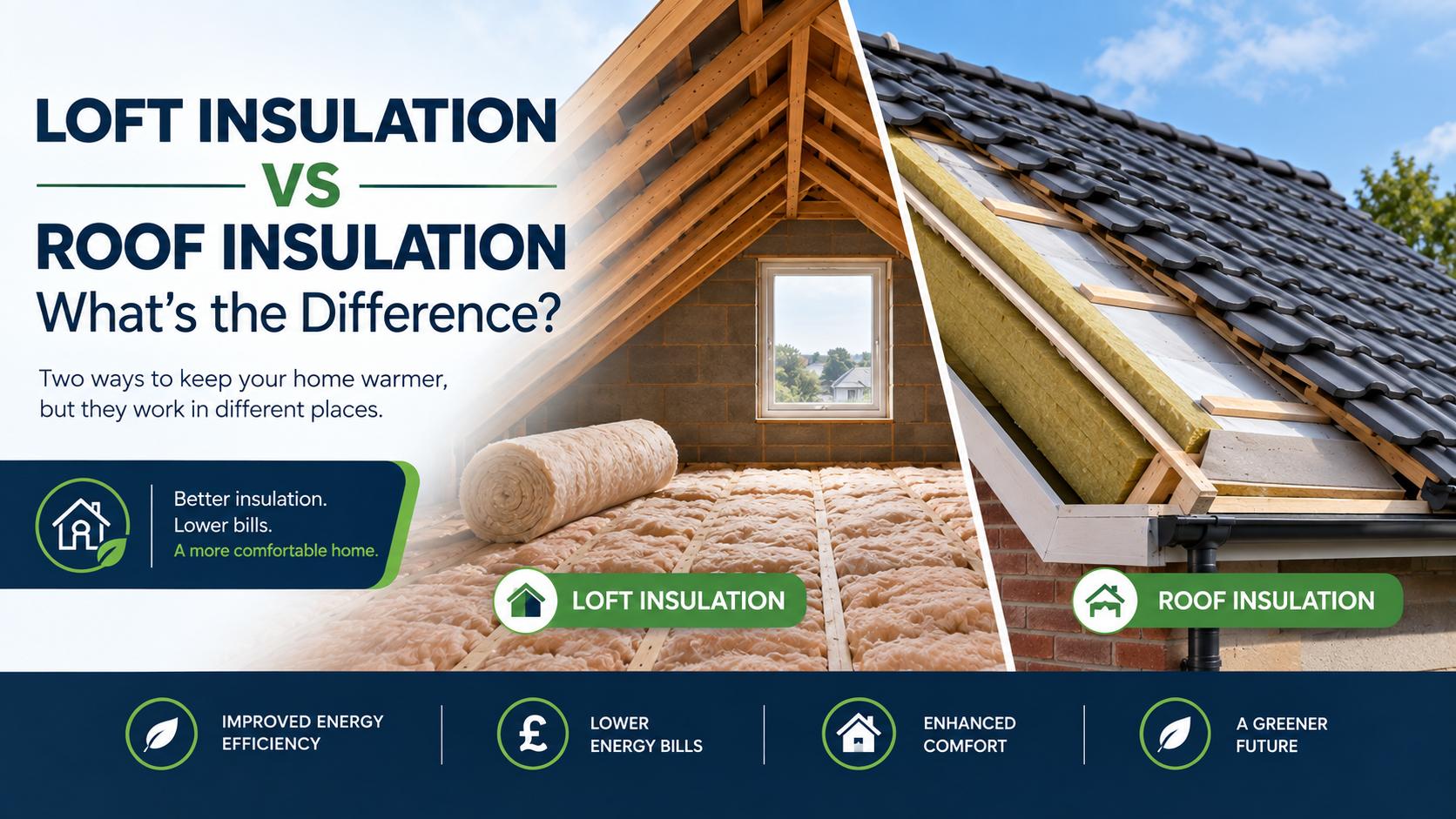
Loft insulation is installed on the floor of your loft, between and over the ceiling joists. Its main purpose is to prevent heat from escaping through the roof by keeping warm air inside the rooms below.
This is the most common form of insulation found in UK homes where the loft is mainly used for storage and is not part of the living space. By insulating the loft floor, the loft itself remains cooler while the rest of the home stays warmer and more energy efficient.
Loft insulation is suitable for many traditional houses and is one of the simplest ways to improve thermal performance.
What Is Roof Insulation?
Roof insulation is fitted directly beneath the roof covering or between the roof rafters instead of on the loft floor. Rather than insulating the living space below, it insulates the roof itself.
This method keeps the loft space warm and is commonly used when the loft has been converted into a bedroom, office, or another habitable room. Roof insulation is also suitable for properties where the loft is regularly used and needs to remain comfortable throughout the year.
The Main Difference Between Loft Insulation and Roof Insulation
The biggest difference is where the insulation is installed.
Loft insulation is placed on the loft floor to keep heat inside the rooms below, while roof insulation is installed within the roof structure to keep the entire loft space warm.
If your loft is used only for storage, loft insulation is usually the better option. If the loft is part of your living space, roof insulation is normally the more suitable choice.
Which Option Is Better for Your Home?
The right solution depends on how your loft is used.
Loft insulation is often recommended if:
- Your loft is used mainly for storage.
- You want to improve energy efficiency.
- You are looking for a cost-effective insulation upgrade.
- The loft is not heated.
Roof insulation may be the better option if:
- Your loft has been converted into a living area.
- You plan to create a loft conversion in the future.
- You want the loft space to stay warm throughout the year.
- Heating is used within the loft.
A professional survey can help determine which option is most suitable for your property.
Can You Have Both Loft and Roof Insulation?
In some situations, both types of insulation can be installed together. This usually depends on the design of the property and how the loft is used.
For example, some homes have insulated roof slopes as well as additional insulation in other parts of the loft to improve overall thermal performance. However, insulation should always be installed correctly to maintain suitable ventilation and avoid moisture problems.
A qualified installer can recommend the most effective approach for your home.
How Do They Affect Energy Efficiency?
Both loft insulation and roof insulation help reduce heat loss, but they do so in different ways.
Loft insulation keeps heat inside the rooms below by creating a barrier at ceiling level. This reduces the amount of heat escaping into the unused loft space.
Roof insulation keeps the entire loft within the insulated part of the home, making it more suitable for heated loft rooms and converted spaces.
In either case, improving insulation helps reduce the amount of energy needed to maintain comfortable indoor temperatures.
Will Insulation Help Lower Energy Bills?
Improving insulation allows your heating system to work more efficiently because less heat escapes through the roof.
When your home retains warmth for longer, the heating system does not need to operate as frequently. Over time, this can reduce overall energy consumption and help lower household heating costs.
The amount you save depends on factors such as your property's insulation levels, heating habits, and the condition of the existing insulation.
Does Insulation Improve Comfort?
Yes. Both loft insulation and roof insulation help create a more comfortable home by reducing heat loss and maintaining more stable indoor temperatures.
Many homeowners notice that rooms stay warmer during colder months and feel more consistent throughout the day. Proper insulation can also reduce cold spots and improve overall comfort across the property.
How Long Does Insulation Last?
Modern insulation materials are designed to provide reliable performance for many years when installed correctly.
Loft insulation generally requires very little maintenance and can continue performing effectively for decades. Roof insulation also offers long-term durability, provided the roof remains in good condition and adequate ventilation is maintained.
Occasional inspections can help ensure the insulation continues performing as expected.
Why Professional Installation Matters
Although insulation may appear straightforward, proper installation is important for achieving the best results.
Professional installers assess your property's construction, recommend the most suitable insulation solution, and ensure the insulation is fitted correctly without blocking ventilation or affecting the roof structure.
Correct installation helps maximise energy efficiency, improves long-term performance, and reduces the risk of future problems.
Why Choose Infinity?
Infinity provides professional insulation solutions for homeowners across London. Our experienced team carries out detailed property assessments before recommending the most suitable insulation option based on how your home is built and how your loft is used.
We focus on quality workmanship, practical advice, and long-term energy efficiency. Whether you need loft insulation for an unused loft or roof insulation for a converted space, our team delivers reliable solutions designed to improve comfort and reduce heat loss.
Conclusion
Understanding the difference between loft insulation and roof insulation helps you choose the right solution for your property. While both improve energy efficiency, they are designed for different purposes depending on how your loft is used. Choosing the correct insulation can make your home warmer, reduce heat loss, and improve overall comfort throughout the year.
If you are unsure which option is right for your property, Infinity is here to help. Our experienced team can assess your home, explain the available options, and recommend the insulation solution that best suits your needs, helping you create a warmer and more energy-efficient home for years to come.
Ready to improve your home's energy efficiency?
Check your eligibility for grants and book a free survey with our team.
Book Free Survey