
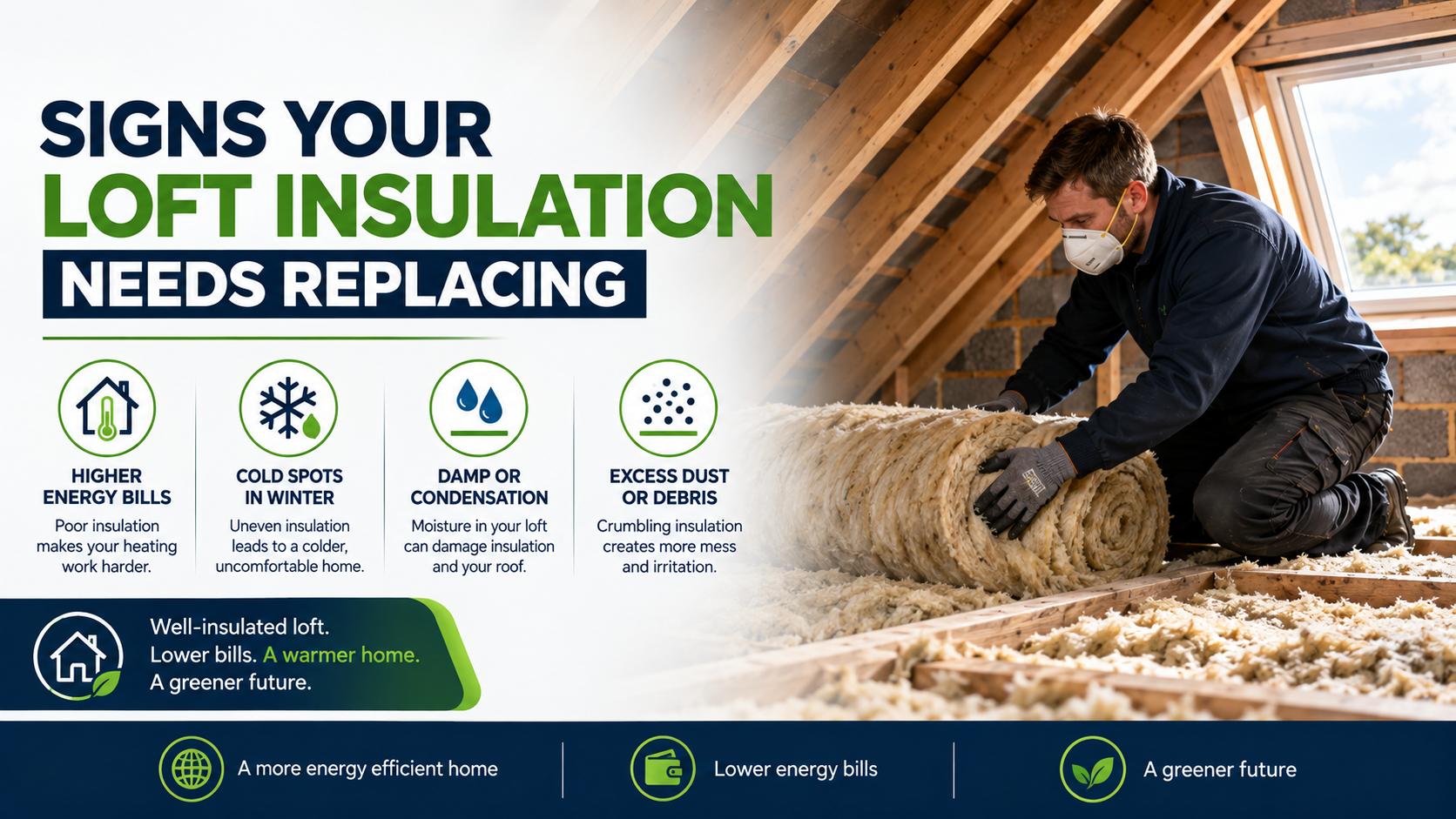
Your loft insulation plays an important role in keeping your home warm, comfortable, and energy efficient. Over time, however, insulation can become damaged, compressed, damp, or simply less effective than modern insulation materials. When this happens, your home may lose more heat, your heating system may have to work harder, and your energy bills can begin to rise.
Knowing the warning signs can help you take action before the problem becomes more expensive. In this guide, we explain the most common signs that loft insulation needs replacing, why it happens, and how replacing old insulation can improve your home's energy performance.
Why Loft Insulation Becomes Less Effective
Although quality loft insulation can last for many years, it does not always maintain the same level of performance throughout its lifespan. Factors such as moisture, age, poor installation, pest activity, and regular foot traffic in the loft can all reduce its effectiveness.
Older properties may also have insulation that no longer meets today's recommended standards. Upgrading to modern insulation materials can help reduce heat loss and improve overall comfort.
Your Energy Bills Keep Increasing
One of the first signs of failing loft insulation is a steady increase in your heating bills.
If your energy usage has remained similar but your gas or electricity costs continue to rise, heat may be escaping through your roof. As more warmth leaves your home, your heating system has to stay on for longer to maintain a comfortable temperature.
Replacing old insulation can help reduce unnecessary heat loss and improve energy efficiency.
Your Home Feels Cold During Winter
If your home still feels cold even when the heating is on, your loft insulation may no longer be performing as it should.
Poor insulation allows warm air to escape through the roof, making upstairs rooms feel colder and creating uncomfortable temperature differences throughout the property.
New insulation helps retain heat inside the living areas, making your home feel warmer for longer.
The Insulation Looks Thin or Compressed
Loft insulation works by trapping tiny pockets of air that slow down heat transfer. Over time, the material can become compressed due to stored items, regular maintenance work, or natural settling.
Flattened insulation loses much of its insulating ability.
If your insulation appears thin, uneven, or compacted, it may be time to replace it with new insulation that provides better thermal performance.
There Is Dampness or Moisture in the Loft
Loft insulation should always remain dry.
If you notice damp patches, water stains, mould, or a musty smell, moisture may have damaged the insulation.
Wet insulation is much less effective at preventing heat loss and may also contribute to timber damage or mould growth if left untreated.
Before installing new insulation, it is important to identify and fix the source of the moisture.
Mould Is Starting to Appear
Mould growth in your loft can indicate that insulation has become damp or that ventilation is poor.
Besides affecting the performance of the insulation, mould can reduce indoor air quality and may contribute to health problems, particularly for people with asthma or allergies.
Replacing damaged insulation after resolving the underlying issue helps create a healthier home environment.
You Have Had Problems with Pests
Birds, mice, rats, and insects sometimes make their way into loft spaces.
Pests can damage insulation by tearing it apart, creating nests, or contaminating it with droppings. Damaged insulation cannot perform efficiently and may need replacing.
If you have experienced pest activity in your loft, it is worth having the insulation professionally inspected.
Your Loft Insulation Is More Than 20 Years Old
Many older homes still contain insulation that was installed decades ago.
While it may still provide some protection, older insulation is often thinner and less effective than modern products. Building standards have also improved significantly over the years.
Replacing outdated insulation can help improve your home's energy efficiency and lower heating costs.
You Notice Cold Spots Around the House.
If some rooms feel noticeably colder than others, particularly those on the upper floor, heat may be escaping through poorly insulated areas of the loft.
Uneven temperatures often indicate that insulation has gaps, has shifted over time, or is no longer providing adequate coverage.
Replacing the insulation helps maintain a more consistent indoor temperature throughout the home.
You Are Planning Home Improvements
If you are renovating your property, repairing the roof, or carrying out work in the loft, it is a good opportunity to check the condition of your insulation.
Replacing old insulation during renovation work can improve your home's energy efficiency while avoiding additional disruption later.
Many homeowners choose to upgrade their insulation before installing renewable heating systems or carrying out other energy efficiency improvements.
Benefits of Replacing Loft Insulation
Installing new loft insulation offers several long-term benefits for homeowners.
These include:
- Lower energy bills
- Reduced heat loss
- Warmer rooms during winter
- Improved comfort throughout the year
- Better protection against damp and condensation
- Improved Energy Performance Certificate (EPC) rating
- Lower carbon emissions
- Better overall home energy efficiency
Modern insulation materials provide improved thermal performance and help homes stay comfortable while using less energy.
How Infinity Helps Homeowners Improve Loft Insulation
At Infinity, we help homeowners identify when loft insulation is no longer performing effectively and provide professional solutions to improve home energy efficiency. Our experienced team carefully assesses the condition of your existing insulation and recommends the most suitable approach based on your property's needs.
We focus on practical insulation solutions that reduce heat loss, improve indoor comfort, and help lower energy bills. Whether your insulation has become damaged, damp, compressed, or simply outdated, we provide reliable guidance and quality installation services to help your home stay warm and energy efficient.
Conclusion
Recognising the early warning signs of loft insulation needs replacing can help you improve your home's comfort, reduce energy bills, and prevent unnecessary heat loss. If your insulation is old, damaged, damp, or no longer keeping your home warm, replacing it can make a significant difference to your property's energy efficiency.
Investing in modern loft insulation is a simple yet effective way to create a warmer, healthier, and more energy-efficient home for years to come.
Ready to improve your home's energy efficiency?
Check your eligibility for grants and book a free survey with our team.
Book Free Survey