
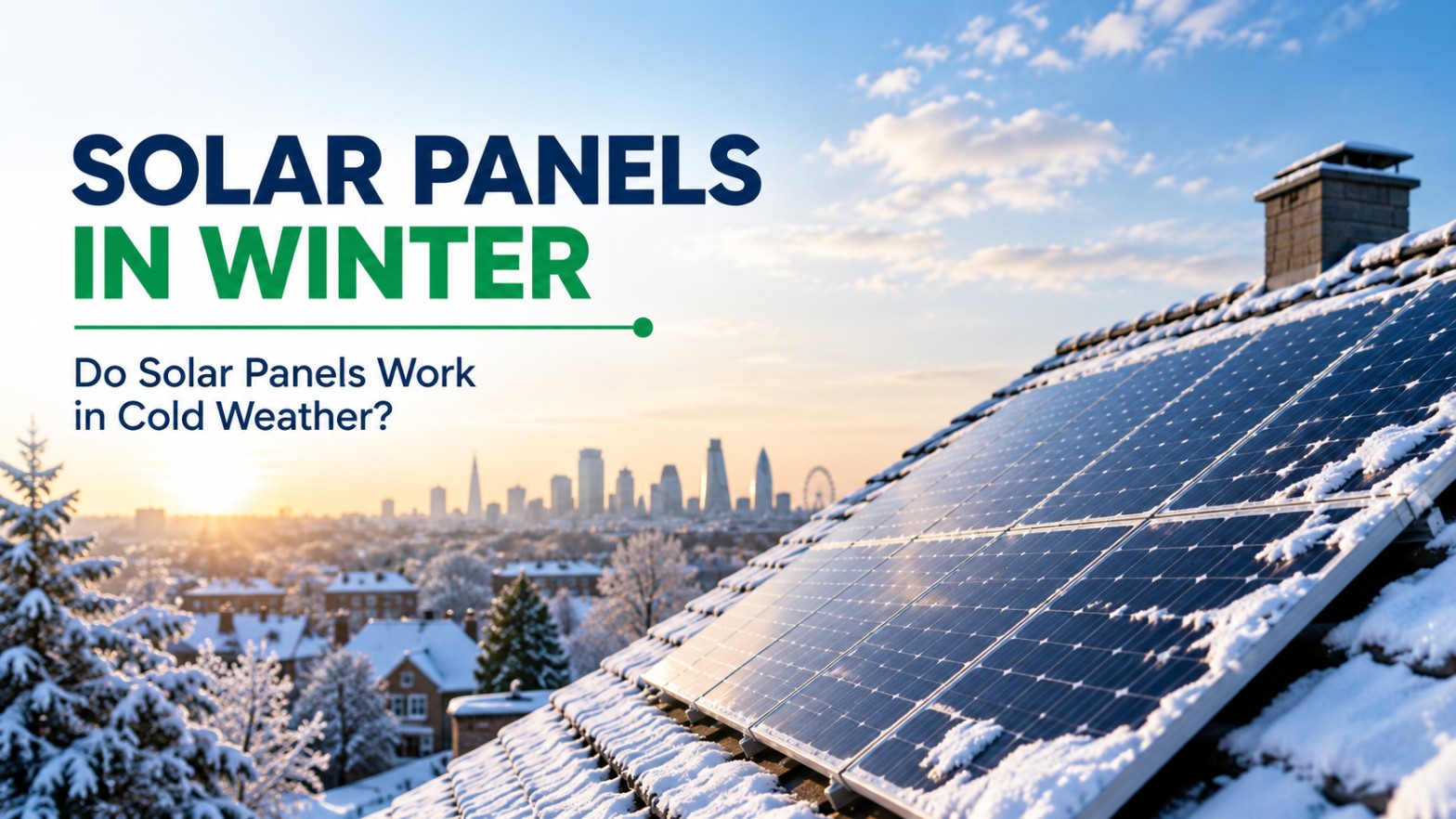
Solar panels in winter can continue generating electricity when temperatures fall, days become shorter, and weather becomes cloudy.
Solar panels do not need heat to produce electricity - they need light. A solar PV system can generate renewable energy for your home or business even on cold winter days.
Do Solar Panels Work in Winter?
Yes, solar panels work throughout winter.
Solar panels use sunlight rather than heat to generate electricity. As long as daylight reaches the panels, they can produce electricity.
Days are shorter, the sun sits lower in the sky, and cloudy weather can reduce the sunlight reaching the panels. As a result, systems usually generate less electricity in winter than during the longer, brighter days of summer.
However, reduced generation does not mean solar panels stop working. Solar PV systems can operate across different weather conditions and provide year-round energy generation.
How Does Cold Weather Affect Solar Panels?
Cold temperatures are not necessarily a problem for solar panels. Photovoltaic panels can operate efficiently in cooler conditions.
Excessive heat can reduce the efficiency of photovoltaic cells, so cooler temperatures can be beneficial when sufficient sunlight is available.
During winter, sunlight is usually a bigger factor than temperature.
Factors affecting winter solar generation include:
- Shorter daylight hours
- A lower winter sun
- Cloud cover
- Heavy rain
- Shading from trees or buildings
- Dirt and debris
- Snow or ice where applicable
Your system can still generate electricity during reduced sunlight, although output may vary.
Can Solar Panels Generate Electricity on Cloudy Days?
Yes. Solar panels can generate electricity when the sky is cloudy.
Clouds reduce the intensity of sunlight reaching the panels, so electricity production is generally lower than on a clear day. However, daylight can still reach the photovoltaic cells.
A well-designed solar PV system does not depend on constant sunshine to operate.
Generation depends on cloud cover, orientation, shading, and system design.
What Happens When It Snows?
Snow can temporarily reduce solar generation if it covers the panels.
Panels are normally installed at an angle, allowing snow to slide off as it melts. Sunlight can also help snow melt.
Avoid climbing onto a roof to remove snow yourself, as this can create safety risks and potentially damage the panels. If snow remains, seek professional advice.
Do Solar Panels Need More Maintenance in Winter?
Solar panels are generally low-maintenance, but winter is a useful time to monitor performance.
Rain can remove some surface dirt, but leaves, bird droppings, and debris can still accumulate. Trees and nearby buildings may also create shading.
Use your solar monitoring platform, where available, to monitor generation. A noticeable and unexpected drop in performance may indicate an issue requiring professional attention.
How Much Electricity Can Solar Panels Generate in Winter?
Winter generation varies from property to property. There is no single figure that applies to every installation.
Performance depends on:
- Location
- Roof orientation
- Roof pitch
- System size
- Panel technology
- Shading
- Weather conditions
- Daylight hours
- Installation quality
A south-facing roof with minimal shading may receive more useful sunlight than a heavily shaded roof.
A professional solar assessment can evaluate your property and estimate annual generation.
Can Solar Batteries Help During Winter?
A solar battery can store surplus electricity generated during daylight hours for later use.
This can be useful when daylight hours are shorter. Daytime electricity can potentially be stored for evening use.
However, battery storage does not create additional solar energy. During prolonged periods of poor weather, there may be less surplus electricity available to store.
A battery should be considered part of the wider energy system, not a solution to lower winter generation.
Is It Worth Installing Solar Panels Before Winter?
Yes. There is no need to wait until summer before installing solar panels.
Solar PV systems can generate electricity throughout the year, allowing you to begin producing renewable energy once the system is operational.
Consider annual energy generation rather than judging solar panels only by winter output. Solar PV is a long-term investment designed to generate electricity throughout the year.
Understanding seasonal generation can help you plan energy use, choose suitable system capacity and make informed decisions about solar panels, battery storage, and future electricity needs at home.
Making the Most of Solar Panels in Winter
Monitor System Performance
Use your monitoring system to track generation and identify unusual changes.
Minimise Shading
Trees and other obstacles can affect generation. Monitor potential sources of shade.
Keep Panels Clear
Leaves and debris can affect performance. Arrange professional cleaning if necessary.
Consider Battery Storage
Battery storage may help make better use of daytime electricity.
Choose Solar for Year-Round Energy Generation
Winter should not be a reason to rule out solar energy. Although solar panels in winter typically generate less electricity than during summer, they can still provide renewable energy throughout the colder months.
The key is a correctly designed and professionally installed system suited to your property, energy consumption, and local conditions.
Infinity can help you understand whether solar PV is suitable for your requirements.
Get Started with Solar Energy
Ready to explore whether solar panels could work for your property?
Contact Infinity today to discuss your solar requirements and take the next step towards generating your own renewable electricity.
Ready to improve your home's energy efficiency?
Check your eligibility for grants and book a free survey with our team.
Book Free Survey